
Wondering about the cost of skincare packaging for your beauty brand? You’re not alone! Many personal care businesses struggle with this crucial aspect of product development. Packaging concept design costs typically range from $8,000-$18,000, with additional artwork expenses of $500-$2,000 per SKU depending on complexity, and comprehensive packaging development from scratch can run between $18,000-$60,000.
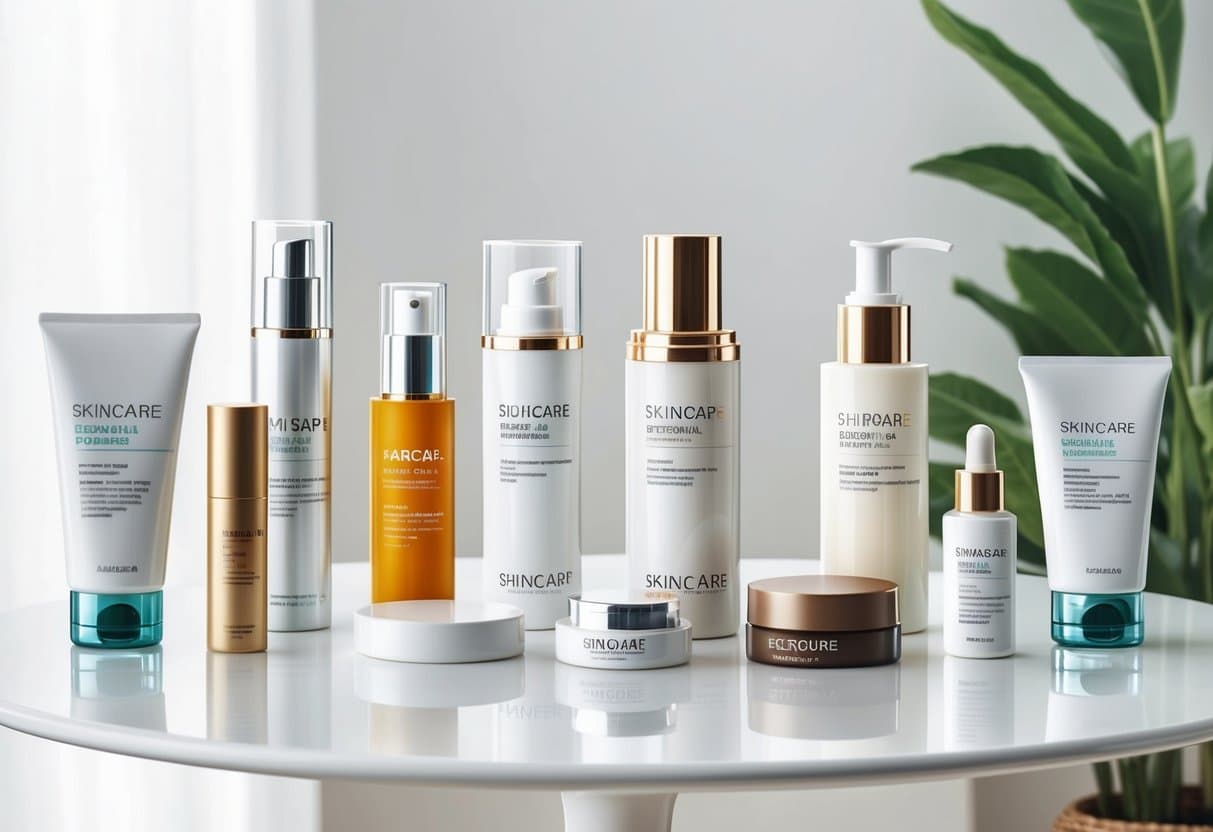
When we talk about skincare packaging, there’s a wide spectrum of options to consider. Are you looking for luxury glass bottles or more affordable plastic containers? Many wholesale suppliers offer everything from fine mist sprayers to airless jars for different budget levels. The material choice significantly impacts both cost and customer perception of your brand.
We’ve found that packaging costs can make or break a beauty startup’s profit margins. That’s why it’s worth exploring various vendors like wholesale cosmetic container suppliers who often provide better pricing for bulk orders. Remember, your packaging isn’t just a container—it’s the first physical interaction customers have with your skincare products!
Understanding Skincare Packaging Costs
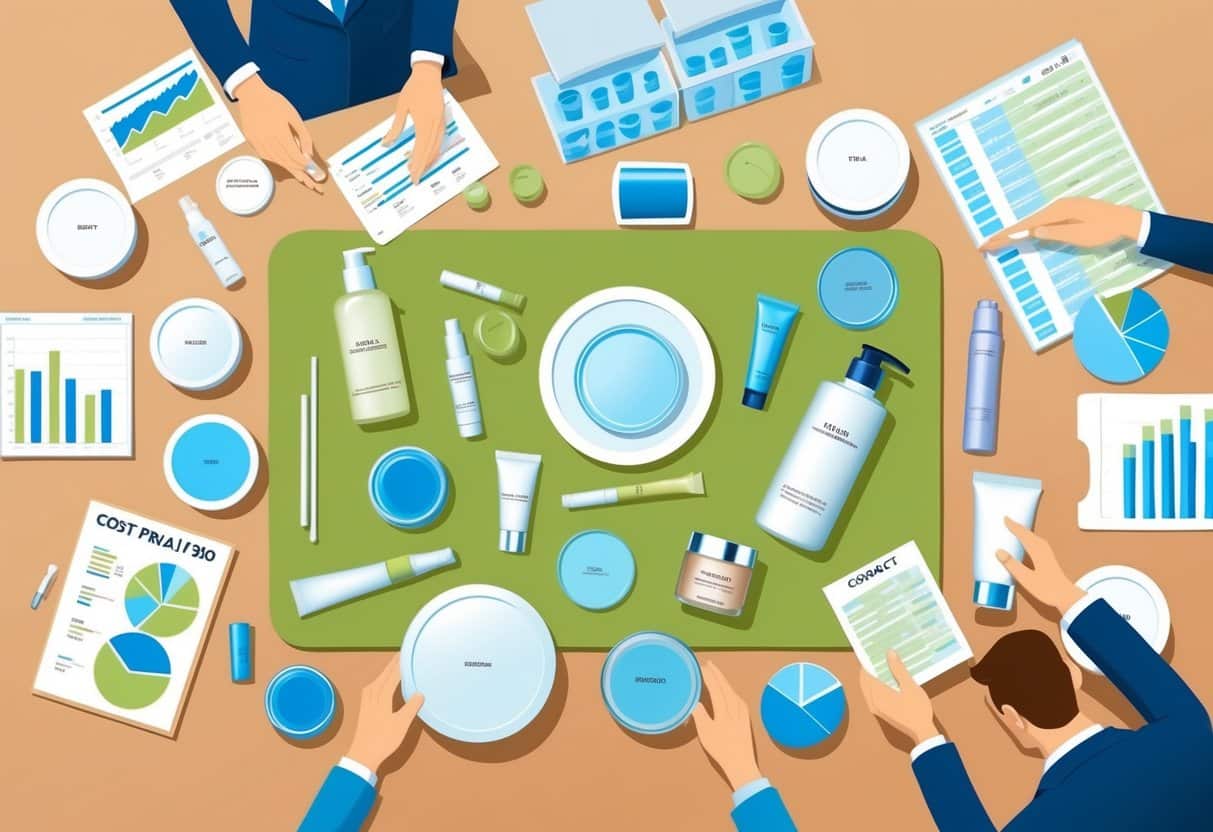
The cost of skincare packaging varies widely based on materials, design complexity, and production volume. We’ve found that packaging typically accounts for 10-40% of a product’s retail price, making it a crucial consideration for both new and established brands.
Types of Skincare Packaging
When launching a skincare line, you’ll encounter various packaging options, each with different price points:
Glass Containers:
- Premium look and feel
- Higher cost ($0.80-$3.00 per unit)
- Environmentally friendly
- Heavier shipping weight
Plastic Containers:
- More affordable ($0.40-$1.50 per unit)
- Lightweight for shipping
- Various finishes available (matte, glossy, frosted)
Pumps & Sprayers:
- Fine mist sprayers: $0.60-$2.00 additional cost
- Treatment pumps: $0.50-$1.80 additional cost
- Airless pumps (prevents product oxidation): $1.00-$3.00 premium
Jar packaging for creams typically costs less than specialized dispensers but offers less product protection. We’ve seen packaging costs for cosmetics range from $0.50 to $2.00 per unit for basic options.
Factors Influencing Packaging Cost
Several key elements impact what you’ll pay for skincare packaging:
Order Volume:
- Small batches (500-1,000 units): Highest per-unit cost
- Medium runs (5,000-10,000): 30-40% cost reduction
- Large production (50,000+): Significant economies of scale
Customization Level:
- Standard packaging: Most affordable
- Custom shapes/molds: $8,000-$18,000 for design
- Custom artwork: $500-$2,000 per SKU depending on complexity, as noted by packaging experts
Material Quality:
- Basic plastic: Lowest cost
- Premium materials (heavy glass, metal components): 2-3x cost increase
- Sustainable options: 15-30% premium
Remember that starting from scratch with custom shapes and designs can push costs to $18,000-$60,000 for development alone. We recommend balancing aesthetics with budget constraints when selecting packaging.
Materials Used in Skincare Packaging
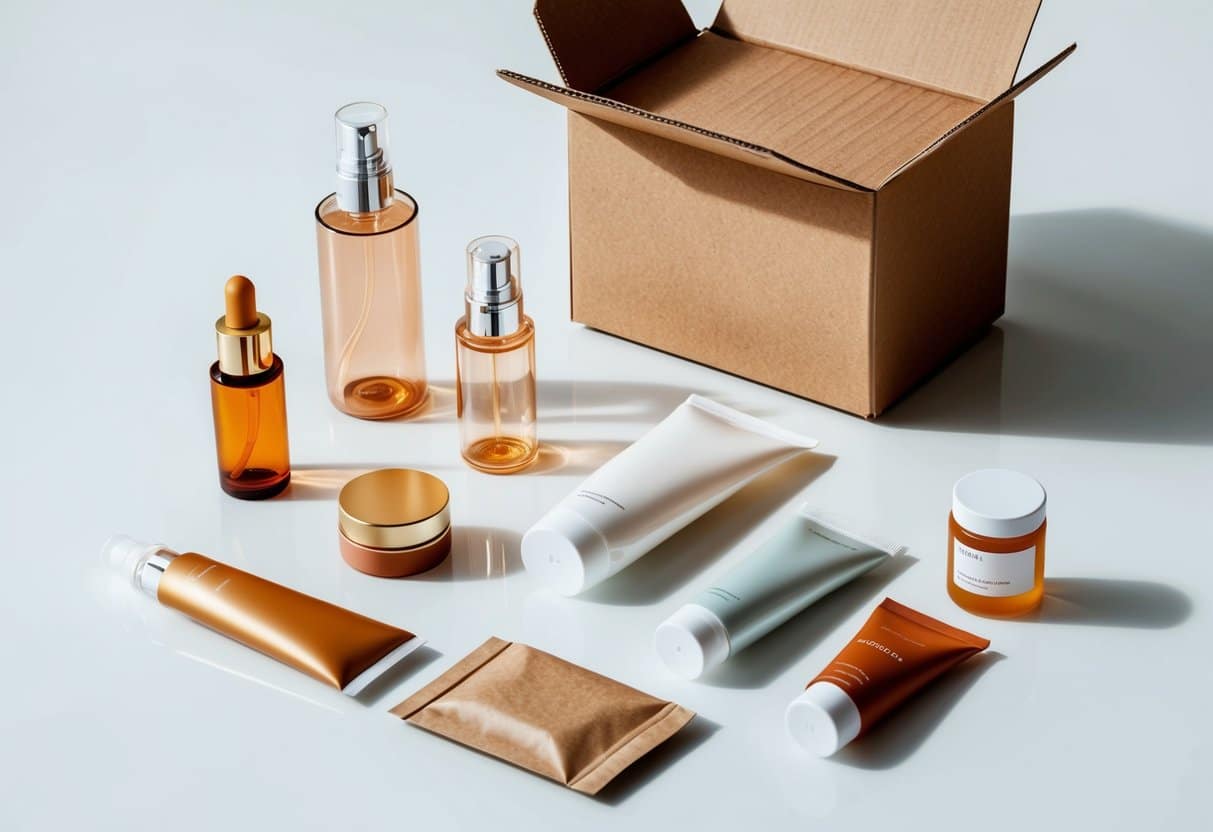
The materials you choose for skincare packaging greatly impact both product quality and customer perception. Different materials offer various benefits in terms of preservation, appearance, and environmental impact.
Benefits of Glass Jars
Glass jars have become a popular choice for premium skincare packaging. Why? They offer excellent chemical stability, preventing unwanted reactions with your products.
Key advantages of glass packaging:
- Product preservation: Glass provides an excellent oxygen barrier
- Premium feel: Creates a luxurious, weighty experience
- Recyclability: 100% recyclable without quality loss
- Visual appeal: Transparent options showcase product color
Glass also allows for various decoration techniques like embossing, screen printing, and metallic accents. However, be aware that glass typically increases your packaging costs compared to plastic alternatives.
We’ve found that consumers often associate glass jars with higher quality products, making them worth considering despite the higher price point.
Plastic Packaging Options
Plastic remains the most versatile and cost-effective option for many skincare brands. Several types serve different purposes:
Common plastic materials:
- PET (Polyethylene Terephthalate): Clear, lightweight, and recyclable
- HDPE (High-Density Polyethylene): Durable with good chemical resistance
- PP (Polypropylene): Heat-resistant and flexible
Plastic packaging typically costs between $0.50-$2.00 per unit, making it significantly more affordable than glass or metal alternatives.
We recommend considering airless pumps for products with sensitive ingredients. These innovative containers minimize air exposure, extending product shelf life without preservatives.
Many brands now offer PCR (post-consumer recycled) plastic options to improve sustainability while maintaining functionality.
Costs of Production and Manufacturing
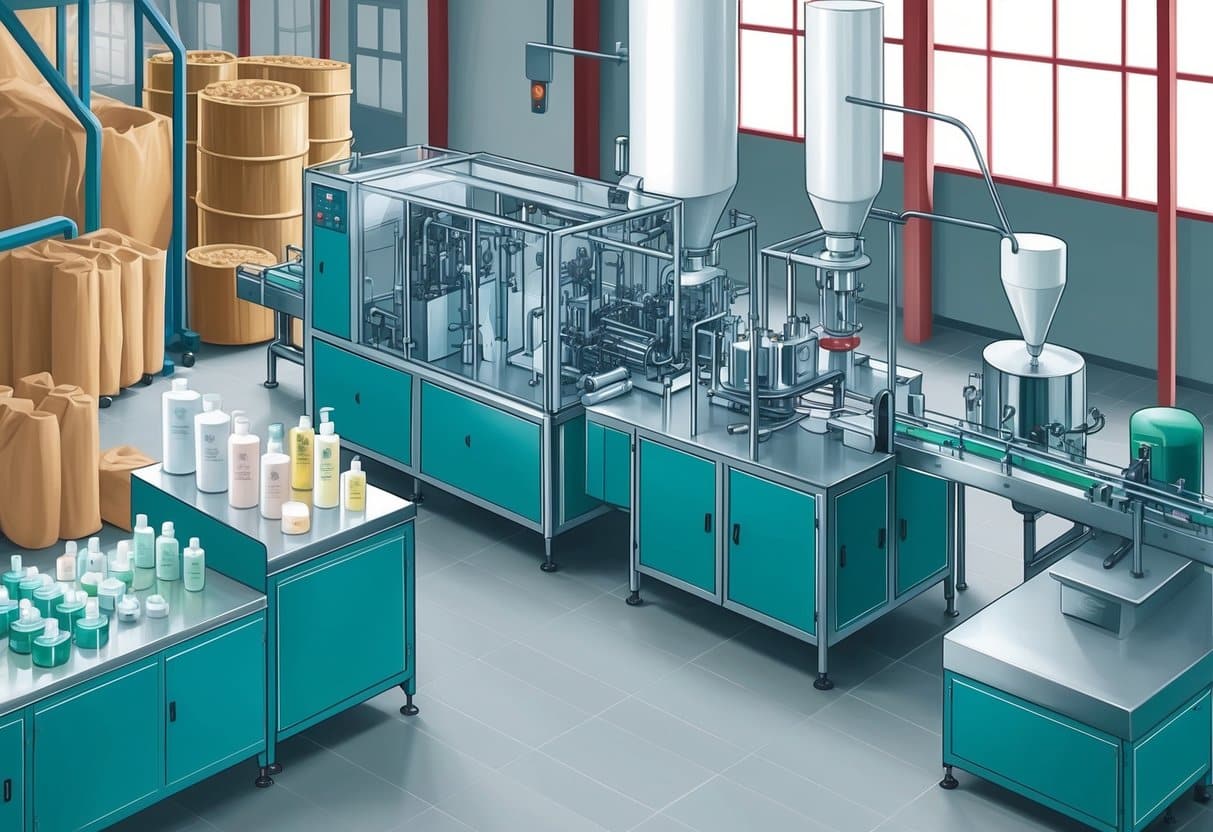
Understanding the financial aspects of skincare packaging is crucial for brands looking to balance quality with profitability. Production costs vary widely based on materials, design complexity, and order volume.
Manufacturing Processes
When it comes to producing skincare packaging, different manufacturing techniques affect your bottom line. Injection molding works well for plastic containers and can cost between $10,000-$30,000 for initial mold creation, but per-unit costs decrease significantly with volume.
Blow molding, commonly used for bottles, typically costs less for setup but may have higher per-unit costs for smaller runs. For luxury brands, processes like glass molding or metal fabrication increase costs but deliver premium appeal.
The actual formulation costs for skincare products typically range from $0.10 to $3 per pound, averaging about $1 per pound. This doesn’t include the packaging itself!
When choosing manufacturing processes, consider:
- Production speed requirements
- Material compatibility with your product
- Decoration methods (printing, labeling, etc.)
Scaling Production and Costs
As your skincare brand grows, your packaging costs should decrease per unit. For small batches, expect to pay premium prices – sometimes 2-3 times more per unit than large-scale production.
A typical cost range for small batches is about 1,500-3,000 euros for 2,000-3,000 units. That’s roughly $0.50-1.50 per unit just for packaging!
When scaling up, we’ve found these cost-saving opportunities:
- Bulk material purchasing reduces per-unit costs
- Longer production runs amortize setup expenses
- Relationship building with manufacturers can lead to better pricing
Package design development from scratch (including shape and graphics) can cost between $18,000-$60,000. However, once established, your packaging and shipping costs generally range from $0.50 to $2.00 per unit depending on size and weight.
Design and Customization
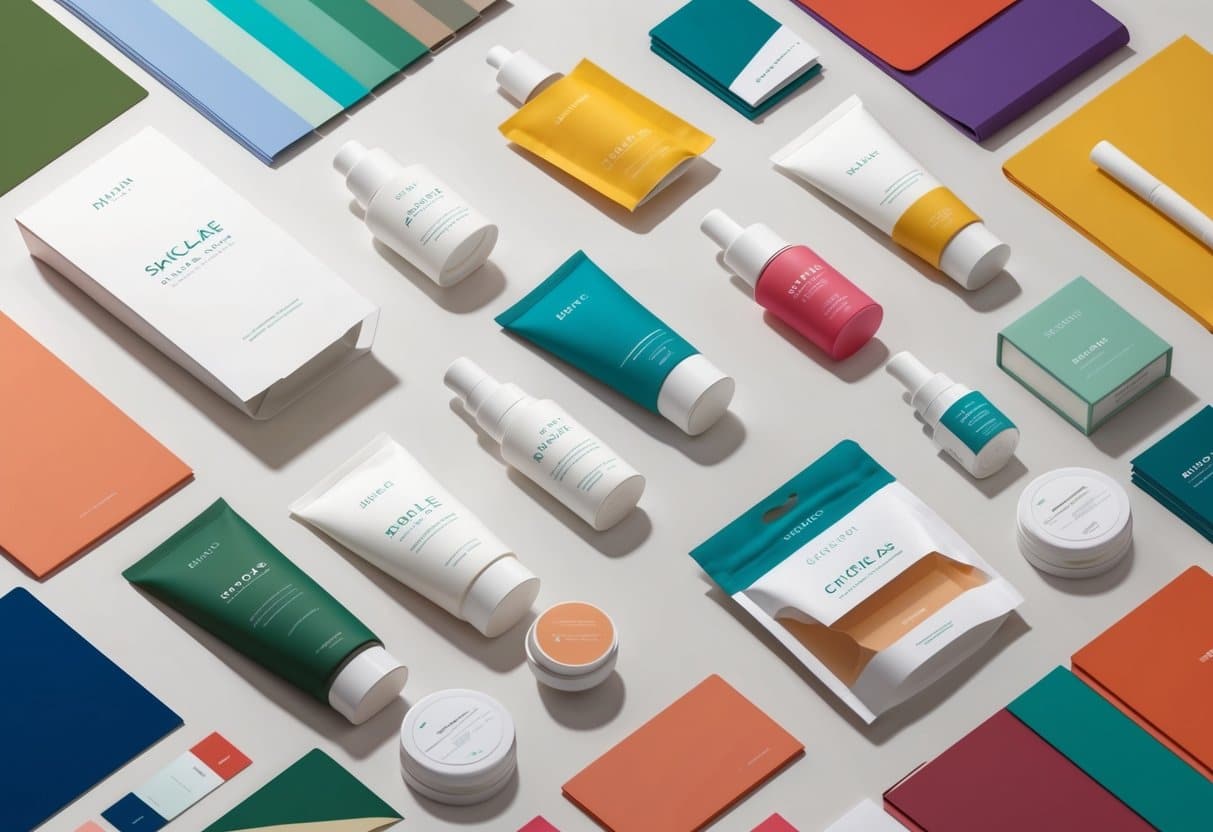
The visual appeal and functionality of your skincare packaging can significantly impact brand recognition and consumer purchasing decisions. Design elements and customization options create opportunities to stand out in a competitive market.
Design Elements and Complexity
The complexity of your design directly affects the cost of packaging. Simple designs with minimal colors and standard shapes are more affordable, while intricate patterns and unique structures increase expenses. When we work with clients, we recommend considering these key design elements:
- Graphics and artwork: More colors and detailed illustrations require additional printing processes
- Structural design: Custom shapes or specialized containers can increase tooling costs
- Finishing touches: Options like embossing, foil stamping, or spot UV coating add to the base price
Most visual design work for cosmetic packaging ranges from $5,000 to $20,000, depending on complexity. This investment covers professional design services that ensure your skincare products look polished and attractive on store shelves.
Benefits of Customization
We’ve found that customized beauty product packaging delivers significant returns despite higher initial costs. Cosmetic packaging expenses typically represent 1% to 30% of your product’s retail price, making it a worthwhile investment for brand building.
Customization offers these advantages:
- Brand recognition: Unique packaging helps customers identify your products instantly
- Premium perception: Well-designed packaging can justify higher price points
- Customer experience: Thoughtful packaging enhances unboxing experiences
Custom skincare packaging also allows for specialized labeling that communicates your brand values. Whether you’re highlighting natural ingredients or sustainable practices, your packaging tells your story before the customer even tries the product.
Many brands find that custom packaging costs vary widely based on specific requirements, but the marketing impact often justifies the expense.
Packaging Types and Their Costs
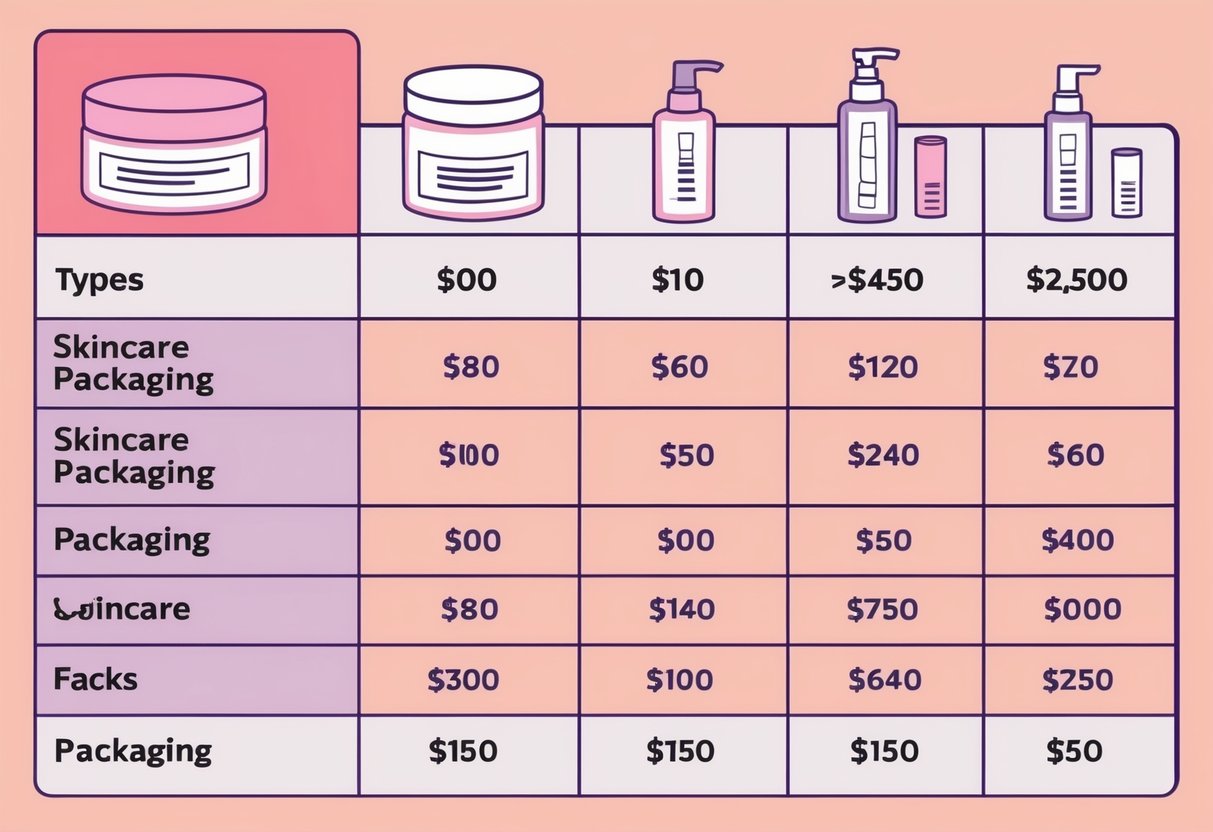
The cost of skincare packaging varies dramatically based on material choice and dispensing mechanisms. We’ve found that packaging typically represents between 1% to 30% of a product’s retail price, depending on quality and functionality.
Comparing Jars and Bottles
Jars remain popular for creams and masks, with basic plastic options starting around $0.75-$1.50 per unit. Glass jars offer a more premium feel and typically cost $1.25-$3.00 each, depending on size and design details.
When comparing materials, remember:
Plastic containers:
- More affordable ($0.50-$2.00 typically)
- Lightweight for shipping
- Less breakable
- Often perceived as less premium
Glass containers:
- More expensive ($1.50-$4.00 range)
- Heavier (increases shipping costs)
- Better preservation properties
- Higher perceived quality
We’ve noticed brands moving toward recyclable and sustainable packaging options, which can increase costs by 15-30% but may improve consumer perception and loyalty.
Advanced Dispensing Solutions
For serums and lightweight products, bottles with droppers or pumps have become industry standards. Basic plastic pumps start around $0.80-$1.50, while more advanced airless pump systems range from $2.00-$4.50 per unit.
Fine mist sprayers deserve special attention for toners and facial mists. Quality matters significantly here:
- Basic sprayers: $0.75-$1.25
- Premium fine mist sprayers: $1.50-$3.00
- Continuous fine mist sprayers: $2.50-$4.50
Airless pumps protect formula integrity by preventing air contamination, extending shelf life. While they cost 30-50% more than standard pumps, they reduce product waste and oxidation problems.
Custom designs with special finishes (metallic, soft-touch, etc.) can increase packaging costs by 40-100%, but they create distinctive shelf presence that may justify the investment for premium brands.
Branding and Labeling Costs
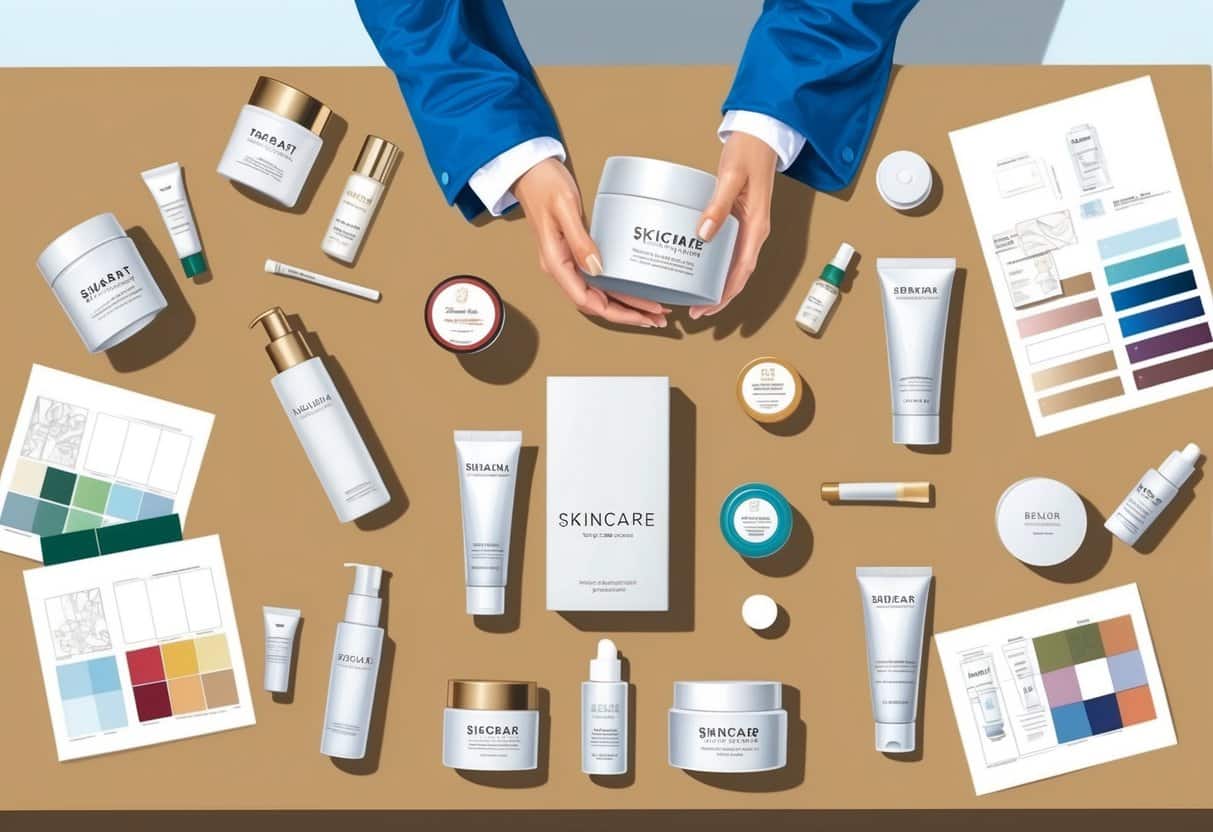
Branding and labeling represent crucial investments for skincare businesses that directly impact customer perception and purchasing decisions. The right packaging design can elevate your product from ordinary to premium.
Importance of Effective Labeling
Good labeling does more than just look pretty—it communicates your brand’s values and helps products stand out on crowded shelves. For skincare products, effective labeling builds trust with consumers who carefully review ingredients and benefits.
Key elements of effective skincare labeling:
- Clear product name and description
- Ingredient list that meets regulatory requirements
- Usage instructions and warnings
- Brand story elements
- Batch codes and expiration dates
Your label design creates the first impression for potential customers. In fact, rebranding costs typically run between 4-8% of annual revenue for skincare businesses, showing how seriously companies take this investment.
We’ve found that minimalist designs with high-quality finishes often perform best in the beauty sector, as they communicate purity and premium quality.
Cost Impact of Labeling Choices
The choices you make about labels significantly affect your overall packaging budget. Basic label printing might start at just cents per unit, but premium options can quickly multiply costs.
Typical labeling cost factors:
| Style Option | Cost Impact | Best For |
|---|---|---|
| Standard paper labels | $ | Budget-conscious brands |
| Waterproof vinyl | $$ | Products used in showers |
| Custom die-cut shapes | $$$ | Distinctive branding |
| Metallic/foil finishes | $$$$ | Luxury positioning |
Visual design for packaging often represents the most expensive component, ranging from $5,000 to $20,000 for professional design work. This includes the creative development, refinement, and preparation of files for production.
We recommend balancing aesthetics with practicality. Custom shapes and special finishes like embossing or spot UV coating make products pop but can add $0.25-$1.00 per unit to your production costs.
Evaluating Suppliers and Packaging
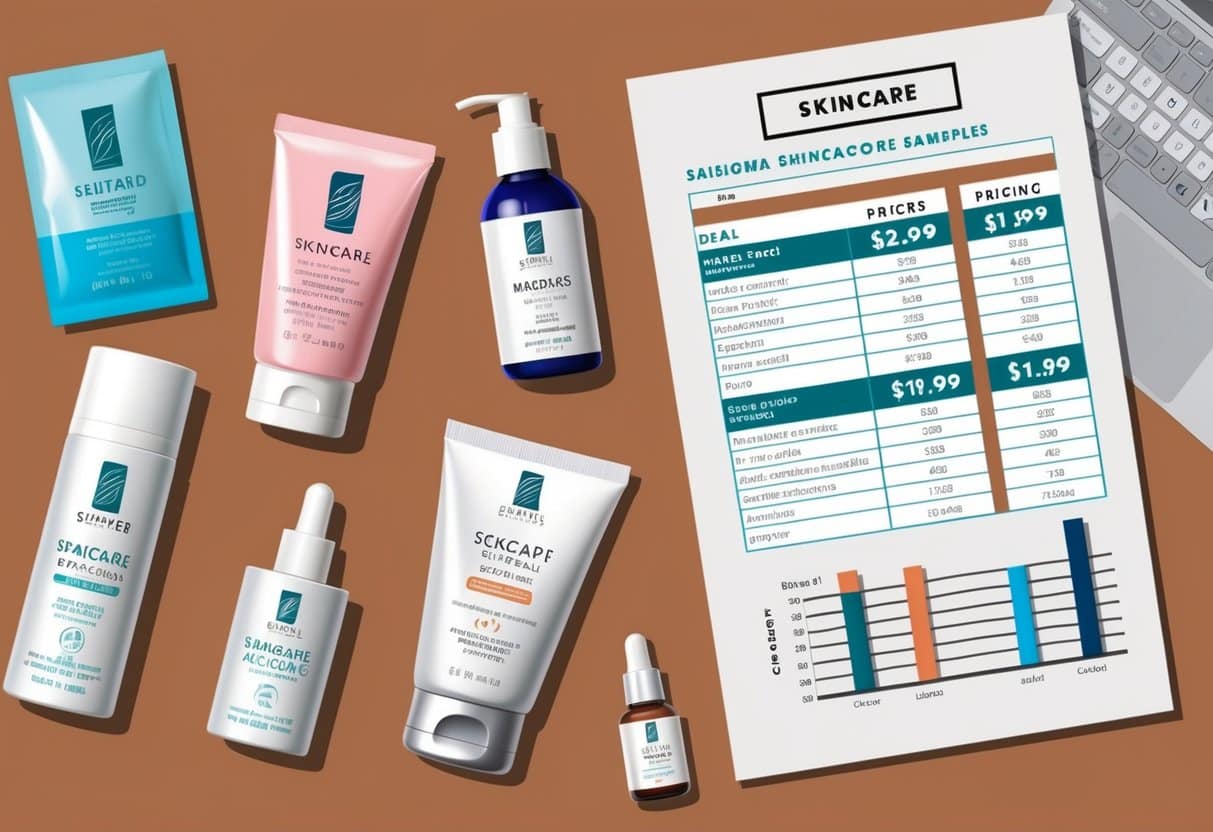
Finding the right supplier at the right price is critical to your skincare product’s success. We’ve found that packaging typically accounts for 10-40% of a product’s retail price, making supplier selection and negotiation essential skills for beauty entrepreneurs.
Selecting the Right Supplier
When choosing a supplier for your skincare packaging, we recommend creating a detailed comparison chart. Look beyond just the price point—quality, minimum order quantities (MOQs), and reliability matter tremendously.
Key factors to evaluate suppliers:
- Quality control processes – Ask for samples and test them thoroughly
- Experience with beauty product packaging specifically
- Production capacity – Can they scale with your business?
- Geographic location – Local suppliers may offer faster turnaround but higher costs
- Certifications – Look for ISO standards or sustainability certifications
Don’t rush this process! We’ve seen many brands regret choosing suppliers based solely on cost. It’s worth contacting at least 3-5 different suppliers to compare their offerings and communication style.
Remember that packaging costs can account for at least 10% of your product’s retail price, so finding the right balance of quality and affordability is crucial.
Negotiating Costs with Suppliers
Once you’ve identified potential suppliers, it’s time to negotiate. We’ve found that most packaging suppliers expect negotiation, so don’t accept the first quote!
Effective negotiation strategies:
- Order in bulk – Leverage economies of scale when possible
- Commit to long-term relationships – Multi-year contracts can secure better pricing
- Simplify your design – Each special feature adds cost
- Time your orders strategically – Some suppliers offer off-season discounts
What about cost breakdowns? For cosmetic formulations, the standard ranges from $0.10 to $3 per pound, with an average of $1 per pound. But packaging costs vary widely.
Be transparent about your budget constraints but also communicate your quality standards. Can the supplier suggest alternative materials or production methods that might reduce costs while maintaining your brand image?
Economic Considerations
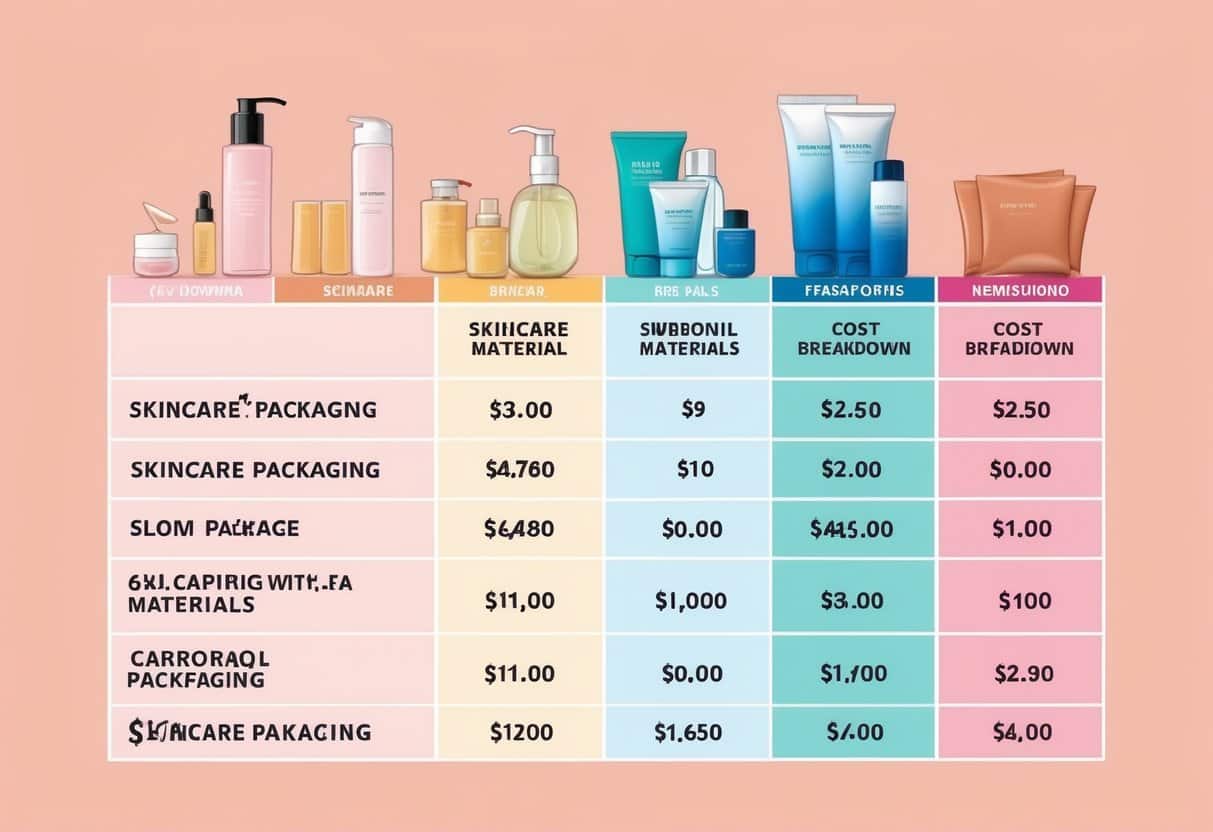
When planning skincare product launches, understanding packaging costs is crucial for business success. Let’s explore how strategic purchasing and market dynamics affect your bottom line.
Bulk Purchasing and Discounts
How volume affects pricing: Ordering packaging in bulk typically reduces costs significantly. When purchasing cosmetic containers, you can expect to save 15-30% when ordering 1,000+ units versus small batches. For example, a jar that costs $1.50 each at 100 units might drop to just $0.85-$1.00 at higher volumes.
Many manufacturers offer tiered pricing structures:
- 100-500 units: Standard pricing
- 501-1,000 units: 10-15% discount
- 1,000-5,000 units: 15-25% discount
- 5,000+ units: 25-40% discount
We’ve found that skincare startups can reduce packaging costs from 10-40% of retail price to the lower end of this range by planning larger production runs.
Establishing relationships with suppliers can unlock additional savings through loyalty programs and preferential pricing agreements.
Impact of Market Trends on Costs
Current trends affecting packaging expenses: Sustainability is driving significant changes in the beauty industry. Eco-friendly materials typically cost 10-25% more than traditional options, but consumer demand can justify premium pricing.
The rise of minimalist packaging has two effects:
- Reduced material costs (fewer components)
- Higher design expenses (making simplicity look premium)
Luxury skincare brands should note that packaging can represent up to 30% of a product’s retail price, especially when using custom components.
Digital printing technologies have reduced costs for small-batch custom packaging by approximately 35% compared to traditional methods. This makes personalization more accessible for indie beauty brands.
Supply chain disruptions have increased packaging costs by 8-12% since 2023. We recommend building these fluctuations into your pricing models when launching new skincare products.
Case Studies and Real Examples
When we researched the market, we found that skincare packaging costs vary widely based on several factors. Let’s look at some real examples that show what brands are actually paying.
For basic cosmetic formulation, the average cost is about $3 per pound, while packaging adds approximately $1 per unit. These numbers can add up quickly when launching a full product line!
The visual design aspect of beauty product packaging is often the most expensive part. According to cosmetic packaging design experts, brands typically spend $5,000 to $20,000 just on the visual design elements.
What materials are brands choosing? We’ve noticed a trend toward diversity:
- Glass containers (premium look, higher cost)
- Different types of plastic (cost-effective but less sustainable)
- Aluminum packaging (growing in popularity)
In examining successful skincare brands, we’ve learned that user feedback heavily influences packaging decisions. Companies that listen to customers about packaging preferences often see better market results.
The competitive nature of the skincare market has pushed brands to invest in specialized packaging. Many companies now choose containers specifically designed for:
- Foaming cleansers
- Serums
- Masks
- Moisturizers
Quality matters tremendously in this industry. High-quality packaging not only preserves product integrity but also communicates brand value to consumers.
Sustainability is becoming a major consideration too. The top 10 global cosmetics companies are investing in eco-friendly packaging options despite higher upfront costs.
