
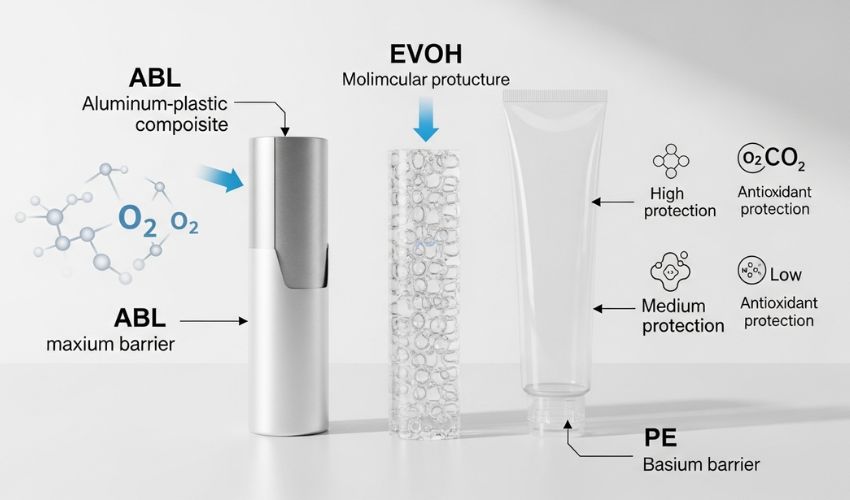
なぜこれほど多くの抗酸化製品は、開封する前に効果を失ってしまうのでしょうか?主な原因は、空気、光、湿気への曝露によって引き起こされる酸化です。これらの要素は敏感な成分を分解し、有効性を低下させ、保存期間を短縮します。
製品内で実際に何が起こっているかは次のとおりです。
- 酸化のメカニズム: 酸素分子は抗酸化物質と反応し、分解を引き起こします。この化学プロセスは製品を弱めるだけでなく、色、匂い、質感を変える可能性があります。
- 光感度: 紫外線と可視光線は酸化を促進し、空気だけより早く分解を引き起こします。
- 湿気の影響:水蒸気がパッケージに浸透し、成分をさらに劣化させる反応を促します。
現実世界の影響は明らかです。ビタミン C、レチノール、ペプチドなどの抗酸化物質は、十分に保護しないとすぐに効力を失います。これは消費者を失望させ、ブランドの評判を傷つける可能性があります。
ここではパッケージが重要な役割を果たします。鍵となるのは、チューブが酸素、水蒸気、光をどれだけ遮断するかを示すバリア性能です。透過率 (酸素の OTR と水分の WVTR) によって、これらの元素がどれだけ透過するかが決まります。バリアが優れているほど、製品の安定性と効果が長く持続します。
リスクの高い抗酸化製剤には次のようなものがあります。
- 急速に酸化するビタミンC美容液
- 光や空気に敏感なレチノールクリーム
- 湿気によるダメージを受けやすい植物エキス
適切な包装用バリアチューブを選択することで、これらの強力な成分を最後の一滴まで新鮮で機能的に保つことができます。
材料の内訳と技術仕様の詳細
酸化防止剤の包装に関しては、適切なチューブ素材を選択することが重要です。 PE、ABL、EVOH ベースの PBL チューブという 3 つの主要なオプションを詳しく見てみましょう。配合や予算に応じて、それぞれに独自の長所と短所があります。
| 特徴 | PEチューブ | ABLチューブ | EVOHベースのPBLチューブ |
|---|---|---|---|
| 説明 | 主に低酸素リスク製品向けの、予算に優しいポリエチレン チューブ | 最高級のバリア保護を備えたアルミニウムラミネートチューブ | 酸素バリアと持続可能性を実現するEVOHコポリマー層を備えたプラスチックチューブ |
| 構造 | 単層または多層の押出PE | アルミ箔を含む複数の層 | プラスチック間の酸素バリアとしてEVOHを使用した多層 |
| 酸素バリア | 貧弱から中程度。より高いOTR(酸素透過率) | 素晴らしい;ほぼ透過できない酸素バリア | とても良い; EVOH層は酸素をよくカットしますが、アルミニウムよりは少ないです |
| 防湿層 | 優れた防湿性 | 優れた水分障壁 | 優れた防湿性 |
| 料金 | 低い | 高い | 中~高 |
| 耐久性 | 柔軟性はあるが、損傷には弱い | 硬く、丈夫で、柔軟性が低い | 柔軟性がありながらも強度に優れています |
| 持続可能性 | 広くリサイクル可能ですが、エコではありません | アルミ箔のためリサイクル性が低い | ABLよりもリサイクルが容易。アルミニウムの使用量を減らす |
| 一般的な用途 | 低リスクの抗酸化物質、クリーム | 敏感肌用美容液と高級製品 | エコとバリアを重視した中高級品 |
PE チューブ 低リスク処方の予算ベースライン
PE チューブは、酸素や湿気にあまり敏感ではない粉ミルクを低コストで包装したい場合に最適です。これらは適切な湿気保護を提供しますが、空気暴露に対しては不十分です。酸化があまり心配されないクリームやローションに最適です。
ABL チューブ 侵入不可能な保護のゴールドスタンダード
アルミニウム ラミネート チューブは酸素と湿気を完全に遮断することに優れており、ビタミン C 美容液などの強力な抗酸化物質に最適です。少し硬くて高価ですが、比類のないバリア性能を提供するため、多くの高級ブランドが信頼しています。
EVOH ベースの PBL チューブ 酸素を重視した防衛の持続可能なイノベーター
EVOH チューブは、プラスチックの柔軟性と軽量性を維持しながら、強力な酸素バリア層を追加するというバランスをとっています。さらに、アルミニウムの使用も削減され、リサイクル性と持続可能性の目標の達成に役立ちます。環境に優しいエッジを備えた強力な保護を必要とするブランドに最適です。
簡単に言うと、PE は予算に優しいがバリアに制限があり、ABL はコストが高くリサイクル性が低い最上位クラスであり、EVOH は持続可能性に優れた強力な酸素防御を提供します。フォーミュラの感度とブランドの優先順位が選択の指針となります。
抗酸化用途におけるEVOH、ABL、PEの直接比較
抗酸化製品を保護する場合、適切なチューブを選択することは、いくつかの重要な要素のバランスをとることを意味します。ここでは、EVOH、ABL、PE チューブが 5 つの重要な柱にわたってどのように積み重なっているかを明確に示しています。
| 丸薬 | EVOHチューブ | ABLチューブ | PEチューブ |
|---|---|---|---|
| バリア性能 | 優れた酸素バリア性、低OTR | 業界のゴールドスタンダード、ほぼゼロの OTR | 中程度のバリア、高い OTR |
| 料金 | 中~高、ABL よりも手頃な価格 | アルミニウム層による最高コスト | 最も予算に優しい |
| 持続可能性 | アルミニウムの使用量を減らし、高品質でリサイクル可能 | 下段、アルミニウムはリサイクルを複雑にする | 良質で広くリサイクル可能 |
| 美学 | 滑らかな仕上がり、カスタマイズ可能な印刷 | プレミアムメタリックな外観、高級感のある魅力 | 基本的な仕上げ、限られたデザインオプション |
| 耐久性 | 丈夫だが湿気に弱い | 非常に耐久性があり、穴が開きにくい | 柔軟性はあるが耐突刺性は低い |
シナリオベースの推奨事項
- 最高の保護を必要とする高価値の抗酸化美容液の場合: 選ぶ ABLチューブ 比類のない酸素制御とプレミアムな外観を実現します。
- サステナビリティを重視し、リスクが中程度のブランドの場合: EVOHチューブ バリア性とリサイクル性のバランスが優れています。
- 低リスクでコスト重視の製品の場合: チューブ上 酸化がそれほど激しくない場合、または保存期間が短い場合に適しています。
考慮すべき定量的指標
- 酸素透過率 (OTR): ABL < EVOH < PE
- 水蒸気透過率 (WVTR): ABL < EVOH < PE
- 価格指数 (相対): ABL > EVOH > PE
- リサイクル性評価: EVOH ≈ PE > ABL
このランキングは、米国のブランドが製品のニーズ、予算、持続可能性の目標に合った最適な酸素バリアチューブを選択するのに役立ちます。処方に合ったパッケージの選択について詳しくは、こちらをご覧ください。パーソナルケア用のラミネートチューブの選び方。
専門家が抗酸化製品の安定性を評価するトップバリアチューブをランキング
抗酸化製品の保護に関しては、すべてのバリア チューブが同じように作られているわけではありません。酸素透過率(OTR)、湿気保護、耐久性、コスト、持続可能性などの主要な基準に基づいた専門家のランキングは次のとおりです。
1.ABLチューブ(アルミラミネートチューブ)
- バリア強度: 業界をリードする酸素と湿気のバリア。空気と光をほとんど通さない。
- 耐久性: 急速に酸化しやすい敏感な抗酸化物質に対する優れた保護。
- 料金: 価格は高くなりますが、最高の長期安定性を提供します。
- 使用事例: 最大限の保存期間を必要とする高価な血清や強力な抗酸化物質の配合に最適です。
2.EVOHベースのPBLチューブ
- バリア強度: 酸素バリア性に優れ、特に空気や湿気に対して強い。
- 耐久性: 優れた機械的強度と持続可能性の利点が追加されています。
- 料金: 適度な投資 — ABL より手頃な価格ですが、PE よりも優れています。
- 使用事例: 抗酸化保護を損なうことなく、環境に配慮したパッケージングに重点を置いているブランドに最適です。
3. PEチューブ(ポリエチレンチューブ)
- バリア強度: 基本的な酸素と湿気のバリアで、低リスク処方に適しています。
- 耐久性: 特に長期間にわたって、酸化作用に対する耐性が低下します。
- 料金: 予算に優しく、広くアクセスできます。
- 使用事例: 安定した抗酸化剤または酸化に対する感度が低い製剤に最適です。
ハイブリッドバリアオプションに関するプロのヒント
- PE チューブ内で EVOH 層を組み合わせることで、コスト効率を維持しながら酸素バリアを強化するバランスの取れたソリューションが得られます。
- 一部のブランドは、優れたバリア性と美観を必要とする超高級製品のために、内側の EVOH 層と外側の ABL ラミネートを使用しています。
- これらのハイブリッドの組み合わせを検討すると、過剰な費用をかけることなくパフォーマンスを最適化できます。
深く掘り下げたいブランド向けABLチューブテクノロジー または、予算と製品タイプに対するバリアのニーズを考慮して、持続可能な包装ソリューションを検討することが、2025 年の最も賢明な選択の指針となります。
持続可能性と規制の角度 2025 年に環境に優しいバリアを選択する
2025 年に向けて、包装、特にバリア性能が重要な抗酸化製品では、持続可能性が最優先事項となります。米国のブランドは、製品の完全性も保護する環境に優しいソリューションを使用するよう、消費者や規制当局からのプレッシャーを強めています。
パッケージの選択を形作るトレンド
- リサイクル可能性の義務 全国的に増加しており、メーカーは既存のリサイクルの流れに合った材料を選択するようになっています。
- の 循環経済 このアプローチは、バリアの品質を損なうことなく再利用または効率的にリサイクルできるチューブの設計を奨励します。
- 消費者が望んでいる 持続可能なスキンケアチューブ 酸素や湿気からの保護を維持しながら、環境への影響を軽減します。
バリアタイプ間のトレードオフ
- PEチューブ リサイクル可能性が最も高く、環境への影響が低いですが、酸素バリアが弱いため、抗酸化安定性が危険にさらされる可能性があります。
- ABLチューブ (アルミニウム ラミネート チューブ) は最高の酸素と湿気のバリアを提供しますが、材料が混合されているためリサイクルが困難です。
- EVOHベースのPBLチューブ アルミニウムラミネートよりも強力な酸素防御力と優れたリサイクル性のバランスが取れており、持続可能な化粧品パッケージとして人気が高まっています。
規制遵守に関する注意事項
- 常に先を行くということは、それ以上のチューブを選択することを意味します 米国の包装規制 そして進化する廃棄物管理法。
- ブランドも考慮すべき OTR(酸素透過率) そして WVTR(水蒸気透過率) パッケージが保存期間と環境目標の両方に準拠していることを確認するためのデータ。
鍵となるのは以下を理解することですバリア性能、持続可能性、規制要求の間のトレードオフ。抗酸化製品ラインの場合、EVOH のような環境に配慮した新しいバリア技術に投資することで、消費者の期待と法的基準を満たしながら、ブランドを将来にわたって保証することができます。
Luxetube ソリューション 抗酸化ラインに合わせたカスタム バリア チューブ
抗酸化製品の保護に関しては、Luxetube はお客様の正確なニーズに合わせて設計されたカスタム バリア チューブを提供します。高い酸素耐性、湿気制御、または持続可能なオプションが必要な場合でも、Luxetube のポートフォリオには EVOH チューブ、ABL チューブ、PE チューブが含まれており、すべて酸化防止パッケージ向けに最適化されています。
Luxetube がもたらすもの
- カスタムバリアオプション: 環境に優しい防御用の EVOH ベースの PBL チューブなどの酸素バリア チューブ、または最高級の製品保護用のアルミニウム ラミネート チューブ (ABL) からお選びください。
- テーラードソリューション: 配合と抗酸化物質の製品ラインが異なります。 Luxetube はブランドと緊密に連携して、チューブの素材を製品の感度や保存期間の目標に合わせます。
- ケーススタディ:天然美容液から抗酸化物質を豊富に含むスキンケアに至るまで、多くのブランドがカスタマイズされたバリアチューブに切り替えることで製品の安定性と保存期間を延ばしています。
- エンドツーエンドのサポート: Luxetube は、初期設計から製造まで、パッケージングの決定を簡素化し、製品の最大限の保存を確保しながら時間を節約します。
パッケージングのオプションと化粧品ラインに適したチューブの選び方について詳しくは、Luxetube のリソースをご覧ください。化粧品チューブの材質を選ぶ そして、その包括的なパッケージングの専門知識を探索してください。
抗酸化製品を保護する準備はできていますか? Luxetube に連絡してカスタム包装の見積もりを依頼し、今すぐ製品の保存期間を延長しましょう。
