
Abstrak
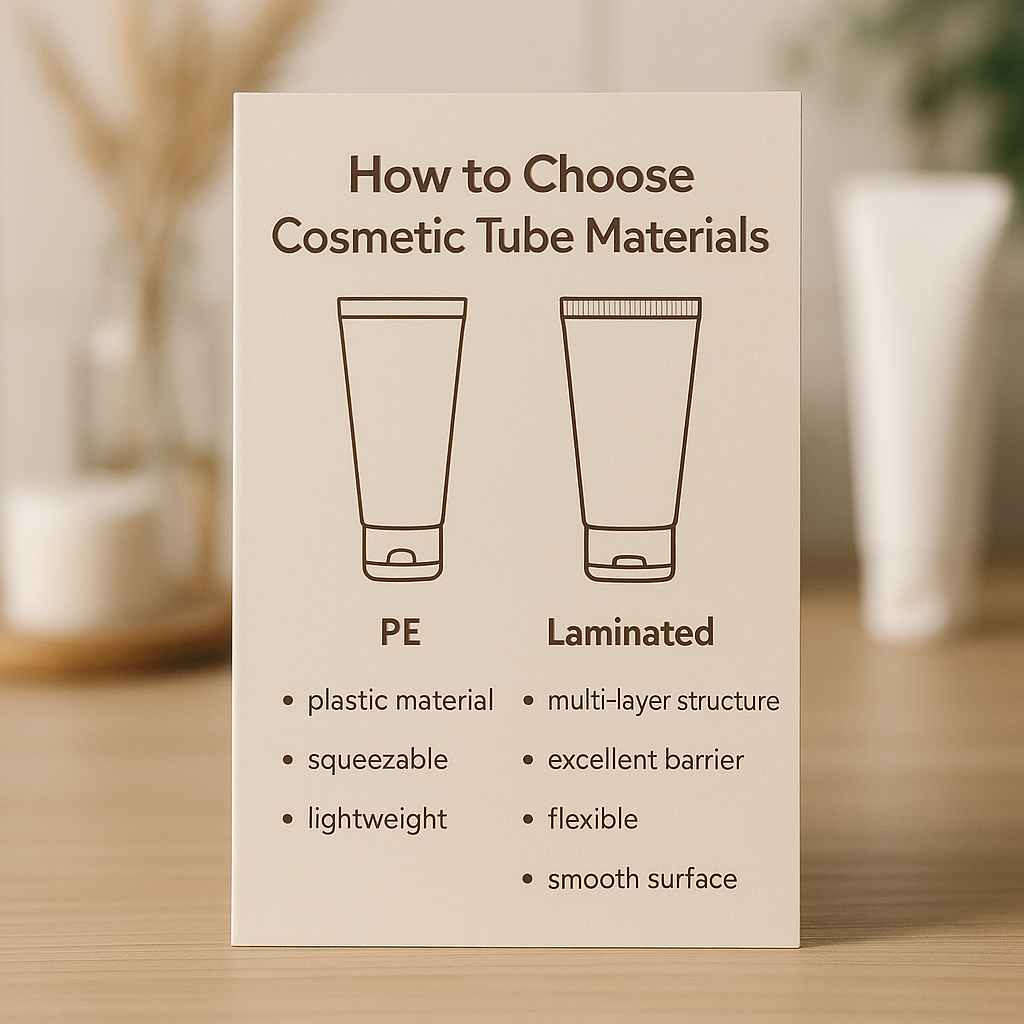
Pemilihan bahan yang tepat untuk kemasan tabung kosmetik merupakan keputusan yang memiliki konsekuensi besar terhadap stabilitas produk, daya tarik konsumen, dan warisan lingkungan.
Analisis ini mengkaji proses beragam dalam cara memilih bahan tabung kosmetik, menavigasi keseimbangan rumit antara bahan kimia formulasi, estetika merek, pengalaman pengguna, dan keharusan keberlanjutan. Ini menyelidiki sifat-sifat bahan utama seperti Polietilen (PE) dalam berbagai kepadatannya, serta struktur multi-lapisan dan laminasi canggih (ABL, PBL) yang dirancang untuk meningkatkan perlindungan penghalang terhadap oksigen, cahaya, dan kelembapan.
Diskusi ini meluas ke bidang material berkelanjutan yang sedang berkembang, termasuk Post-Consumer Resin (PCR), bioplastik seperti PE berbahan dasar tebu, dan peran aluminium yang bertahan lama.
Dengan mengevaluasi pilihan bahan melalui lensa kompatibilitas bahan kimia, kinerja fungsional, potensi dekoratif, dan logistik rantai pasokan, panduan ini memberikan kerangka kerja terstruktur bagi pemilik merek dan pengembang produk.
Tujuannya adalah untuk memfasilitasi proses pengambilan keputusan yang tepat guna menjaga integritas produk sekaligus menyelaraskan dengan tuntutan etika dan komersial yang terus berkembang di pasar global pada tahun 2025.
Poin Penting
- Sesuaikan formula produk Anda dengan sifat penghalang bahan untuk mencegah degradasi.
- Evaluasi opsi berkelanjutan seperti PCR atau tabung tebu untuk memenuhi harapan konsumen terhadap lingkungan.
- Pertimbangkan bagaimana fleksibilitas dan hasil akhir material akan berdampak pada pengalaman pengguna akhir.
- Pastikan bahan yang dipilih kompatibel dengan pencetakan dan efek dekoratif yang Anda inginkan.
- Learning how to choose cosmetic tube materials involves balancing cost, quality, and brand values.
- Partner with an expert manufacturer to navigate complex material specifications and sourcing.
- Factor in the entire package, including caps and applicators, for a cohesive design.
Daftar isi
- Factor 1: Aligning Material Properties with Product Formula Compatibility
- Factor 2: Navigating the Complexities of Sustainability and Eco-Conscious Choices
- Factor 3: Considering the User Experience and Dispensing Functionality
- Factor 4: Evaluating Decoration, Branding, and Aesthetic Potential
- Factor 5: Analyzing the Supply Chain, Manufacturing, and Cost Implications
- Pertanyaan yang Sering Diajukan (FAQ)
- Kesimpulan
- Referensi
Factor 1: Aligning Material Properties with Product Formula Compatibility
Keputusan tentang bagaimana memilih bahan tabung kosmetik tidak dimulai dengan estetika atau biaya, tetapi dengan pemeriksaan kimia yang mendalam dan bijaksana. Tabung bukan sekedar wadah; ini adalah lingkungan utama di mana formula Anda akan hidup mulai dari saat pembuatannya hingga penggunaan akhirnya.
Kesalahan penilaian pada tahap dasar ini dapat menyebabkan berkurangnya kemanjuran, perubahan profil sensorik, atau bahkan kegagalan produk sepenuhnya.
Hubungan antara formula dan kemasannya merupakan dialog yang intim dan berkesinambungan, dan bahan dari tabungnya menentukan isi percakapan tersebut. Memilih dengan bijak berarti bertindak sebagai pengelola yang bertanggung jawab atas produk yang telah Anda kembangkan dengan cermat.
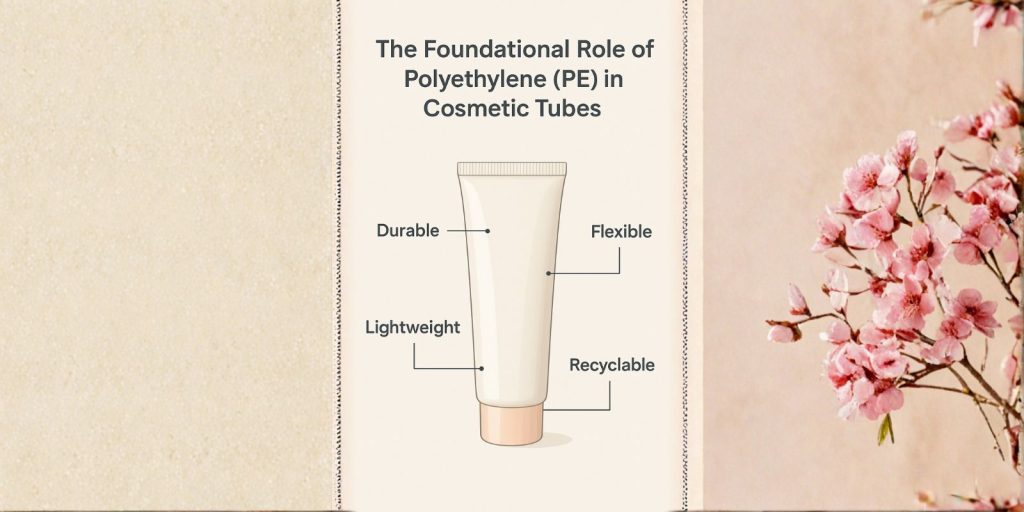
The Foundational Role of Polyethylene (PE) in Cosmetic Tubes
Polietilen mewakili landasan pembuatan tabung kosmetik. Keberadaannya di mana-mana merupakan bukti keserbagunaan, efektivitas biaya, dan sifat-sifatnya yang mudah dipahami.
Namun, untuk dibicarakan “PE” sebagai sebuah monolit adalah mengabaikan perbedaan penting yang membuatnya cocok untuk beragam produk. Mari kita pertimbangkan dua varian utama yang akan Anda temui:
- Polietilen Kepadatan Rendah (LDPE): Bayangkan sensasi tabung krim tangan yang lembut dan lentur. Pemerasan yang mudah dan memuaskan ini sering kali merupakan hasil kerja LDPE. Struktur molekulnya dicirikan oleh percabangan yang signifikan, yang mencegah rantai polimer saling menempel erat. Hal ini menghasilkan kepadatan yang lebih rendah dan fleksibilitas yang lebih besar. Ini adalah pilihan yang sangat baik untuk perawatan kulit untuk keperluan umum seperti lotion dan krim di mana penghalang kimia tingkat tinggi bukanlah perhatian utama.
- Polietilen Kepadatan Tinggi (HDPE): Sebaliknya, HDPE memiliki struktur molekul yang lebih linier dengan percabangan minimal. Hal ini memungkinkan rantai untuk dikemas rapat, sehingga menghasilkan material yang lebih kaku, kuat, dan buram dibandingkan LDPE. Ia menawarkan ketahanan kimia yang sedikit lebih baik, sehingga cocok untuk produk seperti sampo atau pembersih tertentu. Bayangkan sebuah tabung yang harus berdiri kokoh di rak tanpa merosot—HDPE memberikan integritas struktural tersebut.
Pilihan antara LDPE, HDPE, atau campuran keduanya (sering disebut MDPE) adalah keputusan besar pertama Anda. Ini mengharuskan Anda untuk mempertimbangkan viskositas produk Anda dan pengalaman pengguna yang diinginkan.
Serum yang tipis dan encer dalam tabung LDPE yang sangat lembut mungkin akan keluar terlalu cepat, sedangkan balsem yang kental dan padat dalam tabung HDPE yang kaku dapat membuat konsumen frustasi dalam menggunakannya.
| Bahan | Karakteristik Utama | Aplikasi Umum | Sifat penghalang |
|---|---|---|---|
| LDPE | Lembut, fleksibel, tembus cahaya, penghalang kelembaban yang baik. | Krim tangan, lotion, pembersih wajah, sabun mandi. | Penghalang rendah terhadap oksigen dan senyawa organik. |
| HDPE | Kaku, kuat, buram, ketahanan kimianya lebih baik dibandingkan LDPE. | Sampo, kondisioner, produk dengan format lebih besar yang memerlukan stabilitas. | Hambatan sedang; lebih baik dari LDPE tetapi masih permeabel. |
| PBL | Seluruhnya plastik, luar biasa “memantul” (kembali ke bentuk), opsi penghalang yang bagus. | Tabir surya, perawatan kulit premium, salep farmasi. | Baik hingga sangat baik, tergantung ketebalan lapisan EVOH. |
| ABL | Lapisan aluminium foil, penghalang unggul, tidak ada pantulan (“lipatan mati”). | Pasta gigi, pewarna rambut, formula agresif (misalnya bahan aktif berkekuatan tinggi). | Penghalang terbaik terhadap cahaya, oksigen, dan kelembapan. |
Memahami Tabung Multi-Lapisan dan Laminasi untuk Perlindungan Penghalang
Untuk sebagian besar formulasi kosmetik modern, tabung PE satu lapis saja tidak cukup. Bahan aktif seperti Vitamin C (asam askorbat), retinoid, benzoil peroksida, dan banyak minyak esensial alami sangat sensitif. Bahan-bahan tersebut dapat terdegradasi oleh paparan oksigen, sinar UV, atau bahkan dengan berinteraksi atau bermigrasi melalui plastik tabung itu sendiri. Di sinilah kecerdikan tabung multi-lapis dan laminasi menjadi sangat diperlukan.
Bayangkan tabung multi-lapisan sebagai sandwich polimer yang canggih, setiap lapisan menjalankan fungsi tertentu.
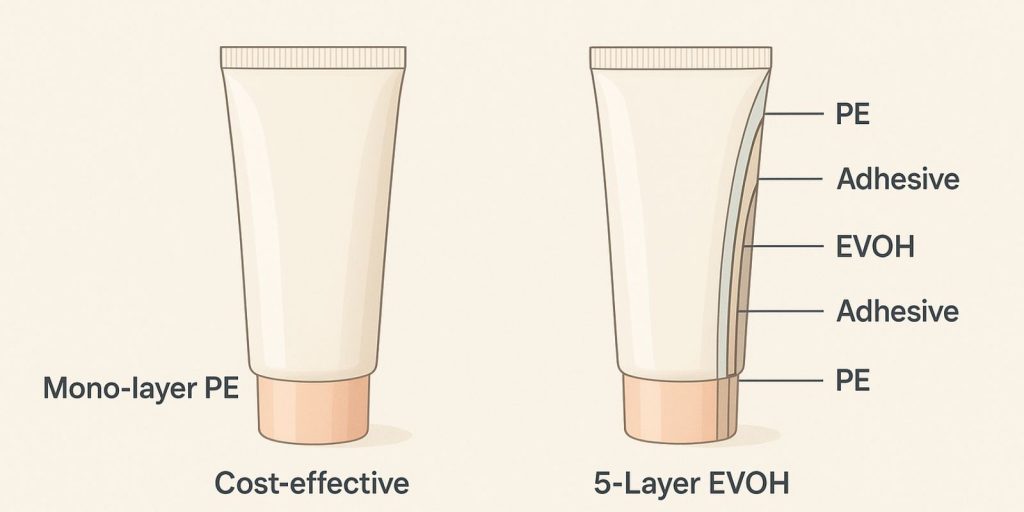
Tabung ekstrusi bersama 5 lapis umumnya terdiri dari lapisan luar PE agar mudah dicetak dan terasa, lapisan dalam PE untuk kontak formula, dua perekat atau “mengikat” lapisan, dan, yang terpenting, lapisan penghalang pusat.
Bahan penghalang yang paling umum digunakan adalah Etil Vinil Alkohol (EVOH). EVOH luar biasa dalam kemampuannya menghalangi aliran oksigen dan gas lainnya.
Kehadiran pelindung internal yang tak kasat mata inilah yang membuat serum antioksidan sensitif tetap ampuh atau mencegah aroma khas krim kaki peppermint menghilang seiring berjalannya waktu.
Tabung laminasi mengambil konsep ini selangkah lebih maju dan umumnya dikategorikan menjadi dua jenis:
- Aluminium Barrier Laminasi (ABL): Seperti namanya, tabung ABL mengandung lapisan tipis aluminium foil, biasanya diapit di antara lapisan plastik. Lapisan aluminium ini memberikan penghalang hampir mutlak terhadap cahaya, oksigen, kelembapan, dan senyawa organik yang mudah menguap. Ini adalah standar emas untuk perlindungan. Inilah sebabnya mengapa produk seperti pasta gigi, pewarna rambut, dan salep farmasi tertentu secara historis menggunakan tabung ABL. Bahannya mempunyai ciri khas “lipatan mati,” artinya produk tetap kusut saat diperas dan tidak muncul kembali, sehingga dapat membantu pengguna mengeluarkan seluruh produk.
- Laminasi Penghalang Plastik (PBL): Tabung PBL menggantikan lapisan aluminium dengan penghalang seluruhnya plastik, biasanya EVOH. Tabung ini menawarkan sifat penghalang yang sangat baik—seringkali cukup untuk sebagian besar produk kosmetik—sekaligus memberikan lebih banyak estetika “memantul” atau “bangkit kembali” kualitas. Mereka kembali ke bentuk aslinya setelah diperas, yang menurut banyak konsumen lebih menarik secara visual. Selain itu, karena dibuat dari satu jenis bahan (plastik), tabung ini dapat menghadirkan jalur daur ulang yang lebih mudah dibandingkan tabung ABL, hal yang akan kita bahas nanti.
Studi Kasus: Memilih Antara Tabung PE Lapisan Tunggal dan Tabung EVOH 5 Lapisan
Mari kita terlibat dalam eksperimen pikiran. Misalkan Anda sedang mengembangkan pelembab wajah baru yang berkualitas tinggi. Itu “pahlawan” ingredient is a delicate, expensive botanical extract known for its soothing properties.
The formula also contains a light, natural fragrance derived from citrus essential oils.
Your initial thought might be to use a simple, cost-effective LDPE tube. It feels nice and is economical. However, a deeper analysis reveals potential problems. The citrus essential oils contain compounds like limonene, which can, over time, “scalp” the product (meaning the fragrance components are absorbed into the plastic) or even migrate through the tube wall, leading to a loss of scent.
Yang lebih penting lagi, ekstrak tumbuhan yang berharga ini mungkin rentan terhadap oksidasi. Jika oksigen dari udara luar dapat menembus dinding LDPE secara perlahan, ekstrak akan terdegradasi dan kehilangan khasiatnya jauh sebelum tanggal kedaluwarsa produk. Pelanggan, setelah membayar harga premium, akan mendapatkan krim tanpa pewangi yang kurang efektif.
Sekarang, pertimbangkan tabung 5 lapis dengan penghalang EVOH. Lapisan PE bagian dalam bersifat inert dan aman untuk kontak formula. Lapisan EVOH bertindak sebagai benteng, mencegah keluarnya aroma jeruk dan, yang lebih penting, menghentikan masuknya oksigen atmosfer.
Lapisan PE luar memberikan permukaan yang indah untuk mencetak logo merek Anda. Meskipun biaya per unit tabung ini lebih tinggi, tabung ini menjamin integritas dan kualitas produk sepanjang siklus hidupnya.
Ini melindungi investasi pelanggan dan, lebih jauh lagi, reputasi merek Anda. Ini adalah contoh nyata bagaimana memilih bahan tabung kosmetik bukan berdasarkan biaya awal, namun berdasarkan nilai total dan mitigasi risiko.
The Chemical Dance: Bagaimana Bahan Aktif Berinteraksi dengan Kemasan
Interaksi antara formula kosmetik dan wadahnya merupakan tarian kimia yang kompleks. Hal ini tidak selalu tentang melindungi formula dari dunia luar; terkadang, ini tentang melindungi wadah dari formula. Bahan-bahan agresif tertentu dapat menyerang bahan kemasan itu sendiri.
Misalnya, formula dengan pH sangat tinggi atau sangat rendah, atau formula yang mengandung pelarut tertentu atau minyak esensial yang kuat (seperti pohon teh atau wintergreen), dapat menyebabkan pembengkakan, retak, atau delaminasi pada tabung yang dipilih secara tidak tepat.
Inilah sebabnya mengapa pengujian kompatibilitas bukanlah langkah opsional; itu adalah bagian wajib dari proses pengembangan produk.
Pengujian ini biasanya melibatkan pengisian tabung yang dipilih dengan formula akhir dan menempatkannya di ruang stabilitas yang mensimulasikan penuaan yang dipercepat (misalnya, suhu tinggi 40-50°C) untuk jangka waktu 1 hingga 3 bulan. Selama waktu ini, produk diperiksa secara berkala untuk mengetahui adanya perubahan warna, bau, viskositas, dan pH.
Tabung itu sendiri juga diperiksa apakah ada perubahan fisik seperti panel terkelupas (mengalah), bengkak, retak pada segel, atau penurunan berat (menunjukkan komponen produk bocor).
Tes yang sukses memberi Anda keyakinan bahwa tarian antara formula Anda dan kemasannya akan harmonis.
Factor 2: Navigating the Complexities of Sustainability and Eco-Conscious Choices
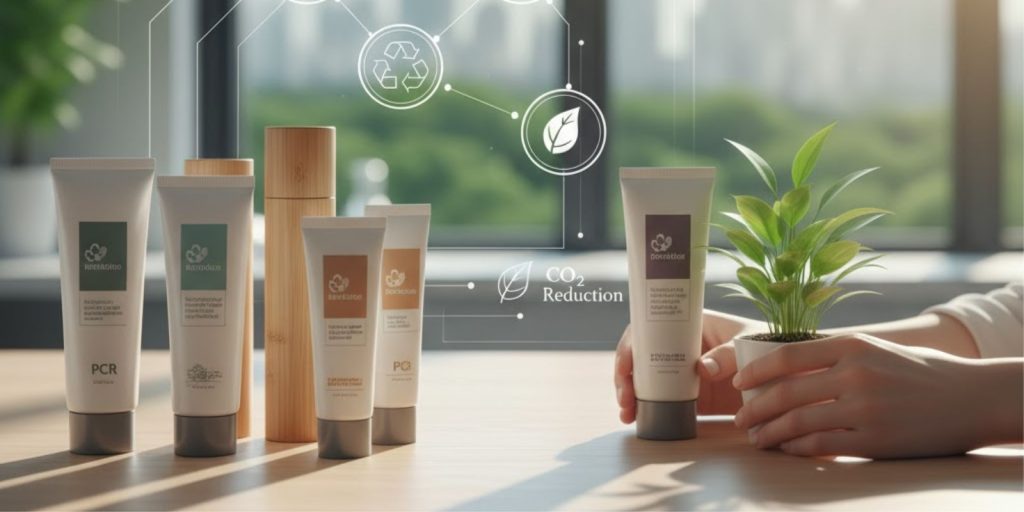
Pada tahun 2025, pendirian suatu merek terhadap keberlanjutan bukan lagi sekedar kisah pemasaran periferal; ini adalah komponen inti dari identitasnya dan pendorong utama pilihan konsumen. Kemasan, sebagai elemen produk yang paling nyata dan dapat dibuang, berada dalam pengawasan ketat.
Diperkirakan 120 miliar unit kemasan kecantikan diproduksi setiap tahunnya, dan sebagian besar berakhir di tempat pembuangan sampah (Topfeelpack, 2024). Oleh karena itu, pertanyaan tentang bagaimana memilih bahan tabung kosmetik terkait erat dengan pertanyaan tentang tanggung jawab ekologis. Ini bukanlah persoalan sederhana dalam memilih a “hijau” material, namun memahami siklus hidup yang berbeda dan trade-off dari setiap opsi.
Resin Pasca Konsumen (PCR): Menyeimbangkan Konten Daur Ulang dengan Kinerja
Resin Pasca Konsumen (PCR) adalah plastik yang telah didaur ulang dari limbah konsumen—misalnya wadah susu, botol air, dan wadah sekali pakai lainnya yang telah dikumpulkan, dibersihkan, disortir, dan dipelet ulang.
Memasukkan PCR ke dalam tabung kosmetik Anda adalah cara ampuh untuk berpartisipasi dalam ekonomi sirkular. Hal ini mengurangi permintaan akan plastik murni berbahan bakar fosil dan mengalihkan sampah dari tempat pembuangan sampah.
Namun, bekerja dengan PCR memerlukan pemahaman teknis dan fleksibilitas tertentu.
- Variasi Estetika: PCR bukanlah bahan yang murni dan seragam. Karena berasal dari campuran barang daur ulang, warnanya mungkin sedikit berbeda. Tabung yang dibuat dengan persentase PCR yang tinggi mungkin memiliki warna agak keabu-abuan atau kekuningan dan mungkin berisi cairan kecil yang hampir tidak terlihat. “bintik hitam.” Untuk merek yang membutuhkan tabung murni berwarna putih salju, ini bisa menjadi tantangan. Namun, banyak merek yang menganut estetika ini, bahkan menyebutnya dalam pemasaran mereka sebagai penanda visual komitmen mereka terhadap keberlanjutan.
- Pertimbangan Struktural: Meskipun pemrosesan modern telah membuat kinerja PCR hampir identik dengan resin murni, terdapat perbedaan kecil dalam pemrosesan dan integritas struktural. Sangat penting untuk bekerja sama dengan pemasok yang memiliki keahlian di bidang manufaktur dengan PCR untuk memastikan ketahanan tabung, terutama pada bagian segel dan bahu.
- Persentase Konten: Tubes can be made with varying percentages of PCR, from 10% up to 100%. The higher the percentage, the greater the environmental benefit, but also the more pronounced the potential aesthetic variations. A common approach is to use PCR for the outer layers of a multi-layer tube, while keeping the inner, product-contact layer made of virgin resin to guarantee purity and compatibility.
The choice to use PCR is a statement. It tells the consumer that you are actively taking responsibility for the packaging lifecycle.
| Sustainable Material | Primary Advantage | Key Consideration | Best For… |
|---|---|---|---|
| Plastik PCR | Reduces waste, supports circular economy. | Potential for slight color/consistency variations. | Brands wanting to make a tangible impact on plastic waste. |
| Sugarcane PE | Terbuat dari sumber daya terbarukan, produksi karbon negatif. | Secara kimia identik dengan fosil PE; tidak dapat terurai secara hayati. | Penggantian langsung PE konvensional untuk mengurangi jejak karbon. |
| Aluminium | Dapat didaur ulang tanpa batas dengan tingkat daur ulang yang tinggi. | Penggunaan energi yang lebih tinggi dalam produksi primer; dapat penyok dengan mudah. | Perlindungan produk maksimal dan memberikan kesan premium/vintage. |
| PBL (Dapat Didaur Ulang) | Konstruksi serba plastik dapat dirancang untuk mendaur ulang sungai. | Penghalang EVOH dapat mempersulit daur ulang di beberapa sistem. | Merek yang membutuhkan perlindungan penghalang yang baik dalam format seperti monomaterial. |
Bio-Plastik: Janji dan Bahaya Tebu dan PLA
Istilahnya “bio-plastik” dapat membingungkan, karena mencakup material berbeda dengan sifat dan skenario akhir masa pakai yang sangat berbeda. Sangat penting untuk memahami perbedaannya.
Salah satu bioplastik yang paling menjanjikan untuk tabung kosmetik adalah Polietilen berbahan dasar tebu. Bahan ini adalah keajaiban berbasis bio. Selama pertumbuhannya, tanaman tebu menangkap CO2 dari atmosfer.
Tebu ini kemudian diolah menjadi etanol, yang selanjutnya diubah menjadi etilen dan kemudian polietilen.
Hasilnya adalah plastik yang secara kimia dan fisik identik dengan PE tradisional yang berasal dari bahan bakar fosil. Artinya dapat digunakan sebagai “mampir” penggantian tanpa perlu menguji ulang kompatibilitas formula atau mengubah proses produksi. Bahan ini juga dapat didaur ulang sepenuhnya dalam aliran daur ulang PE yang ada (No. 2 dan No. 4). Manfaat utamanya adalah asal usulnya yang terbarukan dan perannya dalam mengurangi jejak karbon pada kemasan.
Bioplastik terkenal lainnya adalah Asam Polilaktat (PLA). PLA sering kali berasal dari pati jagung dan dipuji karena keberadaannya “dapat terurai secara hayati.”
Namun, istilah ini memiliki peringatan yang signifikan. PLA hanya akan terurai pada kondisi panas tinggi tertentu di fasilitas pengomposan industri.
Bahan ini tidak akan terurai di tempat sampah kompos di halaman belakang, juga tidak akan terurai di tempat pembuangan sampah atau jika berakhir di laut. Selain itu, jika PLA secara keliru ditempatkan dalam aliran daur ulang plastik standar, hal ini dapat mencemari seluruh kumpulan PET atau PE, sehingga menjadikannya tidak berguna.
Oleh karena itu, meskipun PLA merupakan bahan yang menarik untuk aplikasi tertentu (seperti produk layanan makanan sekali pakai dalam sistem loop tertutup), PLA sering kali menjadi pilihan yang bermasalah untuk barang konsumsi yang didistribusikan secara luas seperti kosmetik.
Saat mempertimbangkan bioplastik, kejelasan siklus hidup PE tebu—sumber terbarukan, kinerja menurun, dan standar kemampuan daur ulang—sering menjadikannya pilihan yang lebih bertanggung jawab dan tidak membingungkan konsumen dibandingkan PLA.
Pertanyaan Aluminium: Daur Ulang, Berat, dan Perlindungan
Tabung aluminium membangkitkan rasa warisan, kualitas, dan kemanjuran farmasi. Mereka menawarkan perlindungan penghalang yang tak tertandingi, seperti yang dibahas sebelumnya.
Dari perspektif keberlanjutan, aset terbesar aluminium adalah kemampuan daur ulangnya yang tak terbatas. Aluminium ini dapat dicairkan dan diubah menjadi produk aluminium baru berulang kali tanpa kehilangan kualitas. Tingkat daur ulang aluminium juga umumnya lebih tinggi dibandingkan plastik di Amerika Utara dan Eropa.
Pertukarannya terletak pada produksi awalnya. Pembuatan aluminium primer dari bijih bauksit merupakan proses yang sangat boros energi. Meskipun penggunaan aluminium daur ulang secara signifikan mengurangi kebutuhan energi ini (hingga 95%), rantai pasokan untuk 100% tabung aluminium daur ulang bisa jadi rumit.
Selain itu, tabung aluminium lebih berat dibandingkan tabung plastik, sehingga dapat meningkatkan emisi karbon terkait pengiriman. Kecenderungannya untuk penyok dan kusut, sekaligus memberikan fungsionalitas “lipatan mati,” mungkin dipandang sebagai kelemahan estetika oleh beberapa merek yang menginginkan tampilan ramping dan sempurna selamanya.
Bagi yang lain, ini “wabi-sabi” kualitas tabung aluminium bekas adalah bagian dari daya tariknya.
Merancang untuk Daur Ulang: Pendekatan Holistik Melampaui Pilihan Material
Desain berkelanjutan yang sejati memerlukan pemikiran tentang keseluruhan paket, bukan hanya badan tabungnya. Ini adalah prinsipnya “Desain untuk Daur Ulang” (DfR). Tabung PE yang dapat didaur ulang dengan sempurna dapat menjadi tidak dapat didaur ulang karena pilihan tutup, selongsong, atau label yang salah.
Pertimbangkan faktor-faktor ini:
- Kombinasi Bahan: Paket daur ulang yang ideal adalah a “monomaterial” satu, dimana tabung, bahu, dan tutupnya semuanya terbuat dari jenis plastik yang sama (misalnya, semua PE atau semua PP). Ketika bahan-bahan tercampur, sistem penyortiran otomatis di fasilitas daur ulang dapat menjadi kacau, dan sering kali mengarahkan paket ke tempat pembuangan sampah.
- Tutupnya: Jika badan tabungnya PE, apakah tutupnya juga PE? Ataukah itu Polipropilena (PP)? Meskipun beberapa fasilitas canggih dapat memisahkannya, pendekatan monomaterial selalu lebih aman. Bagaimana dengan tutup logam pada tabung plastik? Ini adalah titik kontaminasi yang umum.
- Label dan Lengan: Selongsong penyusut seluruh badan yang terbuat dari PVC atau PETG pada tabung PE akan membuat seluruh kemasan tidak dapat didaur ulang. Bahan selongsong merupakan kontaminan. Jika diperlukan label, label tersebut harus berukuran kecil dan terbuat dari bahan yang kompatibel dengan perekat yang dapat dicuci, sehingga dapat dilepas selama proses daur ulang.
- Warna: Plastik berwarna gelap dan hitam karbon tidak dapat dilihat oleh teknologi penyortiran inframerah (NIR) yang digunakan di banyak fasilitas daur ulang. Ini berarti tabung PE hitam, meskipun secara teknis dapat didaur ulang, dapat disortir secara otomatis untuk dibuang ke tempat pembuangan sampah. Memilih warna yang lebih terang atau menggunakan pigmen hitam bebas karbon dapat mengatasi masalah ini.
Memilih jalur yang berkelanjutan melibatkan dialog dengan Anda pemasok kemasan.
Tanyakan kepada mereka tentang pilihan bahan monomaterial, pilihan tutup yang dapat didaur ulang, dan pigmen yang kompatibel dengan sistem penyortiran. Tingkat penyelidikan yang lebih mendalam ini merupakan ciri merek yang benar-benar bertanggung jawab.
Factor 3: Considering the User Experience and Dispensing Functionality

Bahan tabung kosmetik bukanlah wadah pasif; itu adalah peserta aktif dalam ritual sehari-hari penggunaan produk. Kualitas sentuhannya, fleksibilitasnya, dan cara produk tersebut berkolaborasi dengan sistem penutupan, semuanya berkontribusi pada penilaian bawah sadar konsumen terhadap kualitas dan keinginan produk.
Krim yang diformulasikan dengan indah dalam kemasan yang sulit atau tidak menyenangkan untuk digunakan tidak akan mendorong pembelian kembali. Oleh karena itu, empati yang mendalam terhadap pengalaman pengguna akhir harus memandu proses memilih bahan tabung kosmetik.
Faktor Pemerasan: Fleksibilitas Bahan dan Viskositas Produk
Interaksi paling mendasar yang dilakukan konsumen dengan sebuah tabung adalah meremasnya. Besarnya gaya yang dibutuhkan, cara tabung melunak, dan cara mengembalikan bentuknya ditentukan oleh pilihan bahan dan ketebalan dinding.
Ini “faktor pemerasan” harus selaras dengan viskositas formula Anda.
Bayangkan sebuah serum yang sangat tipis dan berbentuk cair. Jika dikemas dalam tabung LDPE yang sangat lembut dan berdinding tipis, jika tas riasan ditekan secara lembut dan tidak disengaja, dapat menyebabkan banyak produk bocor.
Untuk formula seperti itu, bahan yang sedikit lebih kaku seperti MDPE atau bahkan tabung PBL yang menawarkan penyaluran lebih terkontrol mungkin lebih tepat. Pengguna perlu merasa bahwa merekalah yang menentukan berapa banyak produk yang dibagikan, setetes demi setetes.
Conversely, consider a thick, paste-like clay mask. Packaging this in a rigid HDPE tube would be a functional disaster.
The user would have to exert considerable force to dispense the product, and as the tube empties, it would become nearly impossible to get the last 20-30% of the mask out. This leads to customer frustration and product waste.
For such a high-viscosity product, a soft, highly flexible LDPE tube is ideal. An even better choice might be an ABL tube, whose “lipatan mati” characteristic allows the user to roll the tube up from the bottom, ensuring every last bit of the product can be easily extracted.
Tindakan penyeimbangan ini merupakan aspek penting dari desain yang berpusat pada pengguna. Anda harus secara mental (dan fisik) menjalani proses penggunaan produk dari penggunaan pertama hingga terakhir.
Bagaimana rasanya tabung berubah saat dikosongkan? Apakah menjadi sulit untuk ditangani? Apakah ia mempertahankan daya tarik estetisnya?
Tutup, Pompa, atau Aplikator? Bagaimana Penutupan Mempengaruhi Pemilihan Material
Tabung tidak bekerja secara terpisah. Ia membentuk suatu sistem dengan penutupnya—baik itu tutup ulir sederhana, flip-top, pompa pengeluaran, atau aplikator khusus. Pilihan penutupan dapat memberikan tuntutan khusus pada material dan struktur tabung.
- Tutup Standar (Sekrup/Flip-top): Ini adalah penutup yang paling umum dan kompatibel dengan berbagai macam bahan tabung. Pertimbangan utama di sini adalah “benang” di leher tabung atau “kepala.” Bahan tersebut harus cukup kuat untuk menahan torsi pembukaan dan penutupan yang berulang-ulang tanpa terkelupas atau retak.
- Pompa Pengeluaran (Tanpa Udara atau Standar): Pompa sering kali digunakan untuk lotion dan serum bernilai tinggi untuk memberikan dosis yang tepat dan terukur. Sistem pompa tanpa udara, yang menggunakan piston naik di dalam tabung, seringkali memerlukan struktur tabung yang lebih kaku (seperti PBL atau PE berdinding tebal) agar dapat berfungsi dengan benar dan mencegah dinding tabung runtuh ke dalam saat produk digunakan.
- Aplikator Khusus: Pasar kaya dengan aplikator inovatif yang terintegrasi langsung ke kepala tabung: rollerball keramik atau logam untuk mendinginkan krim mata, inti silikon untuk memijat dalam perawatan, atau ujung kuas untuk concealer noda. Aplikator ini sering kali memerlukan desain kepala dan bahu khusus pada tabungnya. Bahan tabung harus dapat dicetak dan dilas dengan baik ke gaya kepala yang lebih kompleks ini. Misalnya, aplikator logam berat mungkin lebih baik ditopang oleh bahu tabung PBL atau HDPE yang lebih kokoh daripada aplikator LDPE yang sangat lunak.
Integrasi tabung dan penutup merupakan kemitraan teknis. Saat Anda mempertimbangkan aplikator inovatif, Anda harus mendiskusikan persyaratannya dengan produsen tabung Anda di awal proses.
Mereka dapat memberi saran tentang material mana yang berhasil dipasangkan dengan penutupan yang Anda inginkan untuk menciptakan pengalaman pengguna yang lancar dan andal. Di sinilah bermitra dengan penyedia layanan lengkap solusi kemasan tabung kosmetik menjadi sangat berharga, karena dapat menjamin kompatibilitas semua komponen.
Sentuhan Kemewahan: Kualitas Bahan Taktil dan Estetika
Selain fungsionalitas murni, sensasi tabung di tangan mengkomunikasikan banyak informasi tentang merek. Pengalaman sentuhan ini, atau “haptik,” adalah alat pemasaran yang ampuh, meski halus.
Tabung PE mengkilap standar terasa bersih, efisien, dan familier. Ini adalah standar karena suatu alasan. Namun, tabung dengan a “sentuhan lembut” atau hasil akhir matte terasa sangat berbeda.
Ini beludru, premium, dan non-slip. Ini berbicara tentang kemewahan yang bersahaja dan estetika modern. Hasil akhir ini biasanya dicapai dengan menambahkan pernis atau pelapis khusus sebagai langkah terakhir dalam proses dekorasi, dan kepatuhan serta umur panjangnya dapat bervariasi tergantung pada bahan tabung yang mendasarinya.
Tabung PBL, dengan bodinya yang mulus dan mulus serta pantulan yang memuaskan, sering kali terasa lebih kokoh dan mewah dibandingkan tabung PE biasa. Sedikit tambahan bobot dan pemulihan bentuk sempurna setelah pemerasan berkontribusi pada persepsi kualitas.
Aluminium, dengan sentuhan metaliknya yang keren dan bobotnya yang memuaskan, menunjukkan kemanjuran, perlindungan, dan sering kali ada hubungannya dengan tradisi apotek atau farmasi.
The way it holds its shape and records the history of its use in its creases and folds can create a personal connection with the user.
When selecting a material, do not just look at a spec sheet. Ask for samples. Hold them. Squeeze them. Close your eyes and focus on the tactile sensation. Does this feeling align with your brand’s story?
Does it feel like a $10 hand cream or a $90 anti-aging treatment? This empathetic, sensory-based evaluation is a crucial step in making a choice that resonates with consumers on an emotional level.
Factor 4: Evaluating Decoration, Branding, and Aesthetic Potential

Tabung kosmetik adalah kanvas kosong. Karya seni, warna, dan tekstur yang diterapkan pada permukaannya mengubah wadah tersebut dari wadah umum menjadi duta yang kuat untuk merek Anda. Ini adalah hal pertama yang dilihat pelanggan di rak dan titik kontak merek yang konstan di meja kamar mandi mereka.
Bahan yang Anda pilih untuk tabung Anda memiliki dampak langsung dan mendalam pada teknik dekoratif yang tersedia bagi Anda, dan pada akhirnya, pada cerita visual yang dapat Anda ceritakan.
Pendekatan yang bijaksana dalam memilih bahan tabung kosmetik melibatkan membayangkan produk akhir yang dihias sejak awal.
Kemungkinan Pencetakan: Offset, Silk Screen, dan Hot Stamping pada Bahan Berbeda
Tiga metode paling umum untuk dekorasi tabung kosmetik each have their own strengths and are suited to different materials and design goals.
- Dry Offset Printing: This is the workhorse of tube decoration. It is a high-speed process where up to 8 colors can be applied simultaneously. It is ideal for photorealistic images, complex gradients, and designs that require precise color registration. Offset printing lays down a relatively thin layer of ink, which makes it very cost-effective for large runs. It works beautifully on the smooth, even surfaces of both extruded PE and laminated (PBL/ABL) tubes. For laminated tubes, the artwork is typically “reverse printed” on the underside of the top plastic layer before it is formed into a tube, protecting the artwork from scratches and wear.
- Silk Screen Printing: Jika Anda menginginkan warna yang berani dan cerah dengan efek yang menonjol dan taktil, sablon sutra adalah pilihan terbaik. Dalam proses ini, tinta didorong melalui saringan jaring halus ke dalam tabung, satu warna pada satu waktu. Metode ini menghasilkan lapisan tinta yang tebal dan buram, sehingga sempurna untuk menghasilkan warna putih cerah atau warna cerah pada tabung gelap atau berwarna. Ini memberikan kesan premium dan bertekstur yang tidak dapat ditiru oleh pencetakan offset. Meskipun lebih lambat dan sering kali lebih mahal dibandingkan offset, kualitasnya tetap terlihat jelas. Tinta ini melekat dengan baik pada tabung PE, PBL, dan ABL, meskipun perawatan permukaan mungkin diperlukan untuk memastikan adhesi tinta yang tepat.
- Stempel Panas: Untuk sentuhan kecemerlangan metalik, hot stamping tidak ada bandingannya. Proses ini menggunakan panas dan tekanan untuk memindahkan lapisan tipis foil logam atau berpigmen ke dalam tabung. Ini digunakan untuk membuat logo, garis tepi, atau teks emas atau perak berkilau yang menangkap cahaya dan menandakan kemewahan. Ini dapat diterapkan pada karya seni offset dan sablon untuk menambahkan detail akhir yang menarik. Permukaan halus dari semua jenis tabung umumnya cocok untuk hot stamping.
Pemilihan material dapat mempengaruhi proses ini. Misalnya, jahitan pada tabung laminasi (ABL/PBL) menciptakan celah kecil yang tidak dapat dihindari pada karya seni 360 derajat mana pun.
Tabung PE yang diekstrusi, karena mulus, memungkinkan desain yang berkesinambungan dan tidak terputus di seluruh kelilingnya. Ini mungkin menjadi faktor penting jika konsep desain Anda bergantung pada gambar sampul.
Dampak Visual dari Material Finish: Glossy, Matte, dan Pearlescent
Di luar karya seni cetak, itu hasil akhir yang melekat pada tabung itu sendiri menentukan nada keseluruhan.
- Selesai Mengkilap: Ini adalah hasil akhir standar untuk sebagian besar tabung. Warnanya cerah, reflektif, dan memberikan warna-warna cerah. Hasil akhir yang mengkilap menunjukkan kebersihan, energi, dan mudah dibersihkan.
- Cetak dof: Hasil akhir matte diperoleh dengan mengaplikasikan pernis khusus non-reflektif pada tabung. Ini menyerap cahaya, memberikan tampilan yang canggih, lembut, dan modern pada tabung. Ini bisa membuat warna tampak lebih lembut dan bersahaja. Hasil akhir matte sering dikaitkan dengan premium, “lebih sedikit-lebih-lebih” merek.
- Efek Pearlescent atau Metalik: Bahan tabungnya sendiri dapat diberi efek khusus. Dengan menambahkan pigmen spesifik ke resin PE sebelum diekstrusi, tabung dapat diberi kilau halus seperti mutiara atau kilau metalik. Hal ini dapat menciptakan efek yang dalam dan berkilau yang tidak dapat dicapai hanya dengan pencetakan, sehingga seluruh kemasan memancarkan kualitas.
Saat merencanakan desain Anda, pertimbangkan bagaimana hasil akhir ini akan berinteraksi. Tabung matte dengan logo emas mengkilap kecil yang diberi stempel panas menciptakan kontras tekstur yang indah.
Gambar fotorealistik yang dicetak pada tabung glossy akan terlihat tajam dan jelas. Bahan dan hasil akhir harus bekerja sama untuk mencapai visi estetika merek Anda.
Untuk merek yang ingin menciptakan tampilan unik, jelajahi opsinya tabung kosmetik khusus dengan produsen yang berpengalaman dapat membuka berbagai kemungkinan kreatif.
Mencapai Identitas Merek yang Kohesif di Seluruh Lini Produk
Kebanyakan merek tidak hanya menjual satu produk. Mereka punya produk—pembersih, serum, pelembab, tabir surya.
Tantangan utamanya adalah mempertahankan identitas merek yang konsisten dan dapat dikenali di seluruh produk yang berbeda, yang mungkin memerlukan jenis kemasan tabung yang berbeda karena formulanya.
Serum Vitamin C Anda mungkin memerlukan tabung EVOH 5 lapis untuk perlindungan. Pembersih harian Anda mungkin baik-baik saja dalam tabung PE satu lapis sederhana. Tabir surya dengan SPF tinggi Anda mungkin memerlukan pelindung superior berupa tabung PBL. Bagaimana Anda membuat ketiga tabung berbeda ini terlihat seperti milik keluarga yang sama?
Di sinilah perencanaan yang cermat dengan mitra pengemasan Anda sangat penting.
- Pencocokan Warna: Bisakah warna Pantone spesifik merek Anda direplikasi secara konsisten pada material PE, PBL, dan ABL? Pemasok ahli dapat mengelola proses ini untuk memastikan warna biru khas merek Anda terlihat sama di setiap produk.
- Selesaikan Konsistensi: Dapatkah pernis matte atau glossy yang sama diaplikasikan pada jenis tabung yang berbeda untuk memberikan kesan dan tampilan sentuhan yang seragam?
- Standar Tipografi dan Grafis: Menggunakan font, penempatan logo, dan elemen grafis yang sama di seluruh tabung akan menciptakan tautan visual yang kuat, meskipun bahan dan bentuk tabung yang mendasarinya sedikit berbeda.
- Penyatuan Topi: Menggunakan gaya dan warna topi yang sama di seluruh lini adalah salah satu cara paling efektif untuk menciptakan tampilan keluarga yang kohesif.
Tujuannya adalah untuk menciptakan a “tata bahasa visual” for your brand that is recognizable to consumers. When they see that specific color, finish, and cap style, they should immediately think of your brand. This requires a holistic view of packaging, seeing it not as a series of individual choices, but as the creation of an integrated brand ecosystem.
Factor 5: Analyzing the Supply Chain, Manufacturing, and Cost Implications
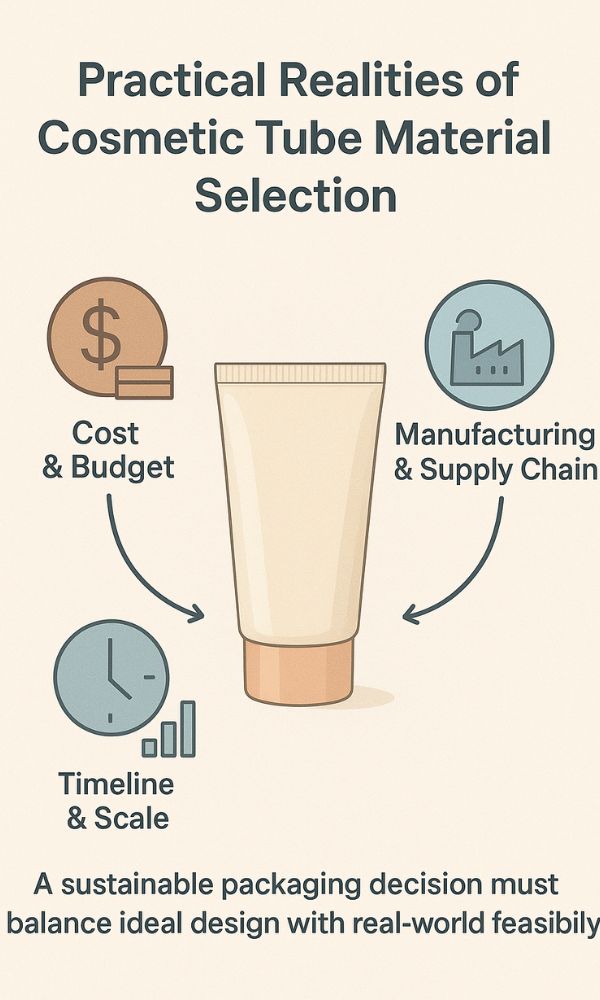
The final set of considerations in choosing a cosmetic tube material is intensely practical, involving the economic and logistical realities of bringing a product to market.
An ideal material choice on paper is meaningless if it is not manufacturable within your budget, timeline, and scale.
Penilaian pragmatis terhadap rantai pasokan, proses manufaktur, dan total biaya sangat penting untuk membuat keputusan bisnis yang berkelanjutan dan sukses.
Lead Time dan MOQ: Realitas Pengadaan Bahan yang Berbeda
Tidak semua bahan tabung diciptakan sama dalam hal ketersediaan.
- Jumlah Pesanan Minimum (MOQ): Ini mengacu pada jumlah unit terkecil yang dapat diproduksi oleh pabrikan dalam satu kali proses. Bahan standar seperti PE putih atau alami sering kali memiliki MOQ terendah, terkadang mulai dari 5.000 atau 10.000 unit, yang dapat diakses oleh merek baru atau merek indie. Namun, jika Anda memerlukan warna khusus, efek khusus seperti kilau mutiara, atau persentase resin PCR yang tinggi, produsen mungkin perlu menetapkan MOQ yang jauh lebih tinggi. Hal ini karena mereka harus membersihkan mesin mereka dan melakukan campuran material khusus untuk pengoperasian Anda, yang hanya ekonomis pada skala yang lebih besar (misalnya, 25.000 unit atau lebih). Tabung laminasi (ABL/PBL) juga sering kali memiliki MOQ yang lebih tinggi karena rumitnya sumber dan pencetakan bahan laminasi datar sebelum dibentuk menjadi tabung.
- Waktu Pimpin: Ini adalah waktu mulai dari melakukan pemesanan hingga menerima tabung yang sudah jadi. Tabung PE standar biasanya memiliki waktu tunggu terpendek, seringkali sekitar 4-6 minggu. Mendapatkan resin khusus, bahan dengan kandungan PCR tinggi, atau laminasi kompleks dapat memakan waktu berminggu-minggu atau bahkan berbulan-bulan. Gangguan rantai pasokan global, seperti yang biasa terjadi dalam beberapa tahun terakhir, dapat berdampak lebih jauh pada ketersediaan polimer atau aluminium foil tertentu.
Untuk merek baru yang meluncurkan produk pertamanya, material dengan MOQ rendah dan waktu tunggu singkat yang dapat diandalkan mungkin merupakan pilihan paling bijaksana, memungkinkan ketangkasan yang lebih besar dan pengeluaran modal awal yang lebih sedikit.
Established brands with predictable sales volumes may be better positioned to leverage the economies of scale that come with ordering specialized materials at higher MOQs.
The Total Cost of Ownership: Beyond the Per-Unit Price
It is a common mistake to select a tube material based solely on the lowest per-unit price quoted by a supplier. This approach ignores the “Total Cost of Ownership,” which encompasses a much broader range of potential expenses and risks.
A cheaper, lower-barrier tube might save you five cents per unit upfront.
However, if that choice leads to 2% of your product spoiling on the shelf due to oxidation, the cost of the lost goods, customer returns, and damage to your brand’s reputation will far exceed the initial savings. Think of the material choice as a form of insurance for your formula.
Consider these hidden costs:
- Product Loss: As mentioned, incompatibility can lead to spoilage.
- Testing Costs: A more complex or novel material may require more extensive and expensive compatibility and stability testing.
- Shipping Costs: Heavier materials like aluminum or thick-walled tubes will increase shipping weights and therefore logistics costs.
- Lost Opportunity Cost: Jika waktu tunggu yang lama untuk suatu bahan khusus menyebabkan Anda melewatkan musim ritel penting (seperti hari libur), hilangnya penjualan bisa sangat besar.
Pendekatan yang paling bijaksana adalah mengevaluasi biaya tabung dalam kaitannya dengan biaya dan sensitivitas formula di dalamnya. Tidak masuk akal untuk mengemas serum seharga $100 per ons, yang diformulasikan dengan bahan aktif yang mahal dan lembut, dalam wadah yang paling murah.
Biaya pengemasan harus dilihat sebagai persentase dari total nilai produk, dan berinvestasi pada perlindungan yang tepat adalah strategi bisnis yang baik.
Bermitra dengan Produsen OEM/ODM untuk Keahlian Material
Menjelajahi labirin ilmu material, peraturan keberlanjutan, dan logistik rantai pasokan dapat menjadi hal yang sangat melelahkan, terutama bagi merek yang tidak memiliki tim teknik pengemasan internal yang berdedikasi. Di sinilah nilai kemitraan yang kuat dengan Produsen Peralatan Asli (OEM) atau Produsen Desain Asli (ODM) yang berpengalaman menjadi jelas.
Produsen ahli lebih dari sekedar vendor; mereka adalah konsultan dan kolaborator. Mereka memiliki pengetahuan mendalam dan langsung tentang kinerja berbagai bahan, tidak hanya di laboratorium, namun juga dalam produksi di dunia nyata. Mereka dapat memberikan panduan yang sangat berharga:
- Rekomendasi Bahan: Berdasarkan daftar bahan formula Anda, estetika merek Anda, dan anggaran Anda, mereka dapat merekomendasikan pilihan bahan yang paling sesuai.
- Sumber dan Pemeriksaan: Mereka telah menjalin hubungan dengan pemasok bahan mentah dan dapat memeriksa kualitas dan keandalan sumber resin, laminasi, dan PCR.
- Kelayakan Teknis: Mereka dapat segera memberi tahu Anda apakah dekorasi yang Anda inginkan dapat dicapai pada bahan tertentu atau apakah tutup pilihan Anda kompatibel dengan kepala tabung tertentu.
- Kepatuhan terhadap Peraturan: Mereka selalu mengikuti perkembangan peraturan pengemasan internasional, seperti peraturan mengenai keamanan kontak makanan atau mandat konten daur ulang, sehingga memastikan kemasan Anda sesuai dengan target pasar Anda.
Dengan memanfaatkan keahlian mitra manufaktur, Anda mengurangi risiko peluncuran produk dan membebaskan tim Anda untuk fokus pada hal terbaik yang mereka lakukan: formulasi, pemasaran, dan pembangunan merek.
Mereka bertindak sebagai panduan Anda melalui proses yang kompleks namun penting dalam memilih bahan tabung kosmetik, memastikan kemasan akhir cantik, fungsional, bertanggung jawab, dan layak secara komersial.
Pertanyaan yang Sering Diajukan (FAQ)
Apa perbedaan utama antara tabung ABL dan PBL?
Perbedaan intinya terletak pada lapisan penghalang. Tabung ABL (Aluminum Barrier Laminate) menggunakan lapisan tipis aluminium foil, yang memberikan penghalang hampir mutlak terhadap cahaya, oksigen, dan kelembapan. Tabung PBL (Plastic Barrier Laminate) menggunakan penghalang plastik, biasanya EVOH (Ethyl Vinyl Alcohol), yang menawarkan perlindungan yang sangat baik namun tidak terlalu mutlak. Secara estetika, tabung ABL tidak akan muncul kembali ketika diremas (a “lipatan mati”), sedangkan tabung PBL memiliki a “bangkit kembali” berkualitas dan kembali ke bentuk semula.
Is PCR plastic safe for cosmetic products?
Yes, PCR (Post-Consumer Resin) is considered safe for cosmetic packaging when sourced from a reputable supplier who follows proper cleaning and processing protocols. To eliminate any risk of direct contact with the formula, many brands opt for a multi-layer tube where the inner layer is made of virgin, food-grade plastic, and the outer layers contain the PCR content. This provides the sustainability benefit without any compromise on product safety.
How do I properly test if my formula is compatible with a tube material?
Praktik industri standar adalah melakukan uji stabilitas. Anda mengisi sampel tabung pilihan Anda dengan formula produk akhir dan menempatkannya di ruang yang dikontrol lingkungan dengan suhu tinggi (misalnya, 40-45°C) dan terkadang suhu bersepeda selama 1 hingga 3 bulan. Hal ini mempercepat proses penuaan. Anda kemudian mengevaluasi produk secara berkala (untuk perubahan warna, aroma, pH, viskositas) dan kemasannya (untuk kebocoran, retak, bengkak, atau delaminasi).
Bisakah saya mendapatkan tabung yang dapat didaur ulang sepenuhnya dan juga memiliki perlindungan penghalang yang baik?
Ya, hal ini semakin mungkin terjadi. Tabung PBL yang dibuat dengan struktur PE dan penghalang EVOH adalah kandidat yang kuat. Meskipun lapisan EVOH merupakan polimer yang berbeda, dalam persentase kecil (biasanya di bawah 5% dari total berat kemasan), lapisan ini sering dianggap kompatibel dengan aliran daur ulang PE oleh banyak otoritas daur ulang. Selalu konsultasikan dengan pemasok pengemasan Anda tentang sertifikasi dan pedoman daur ulang khusus untuk bahan mereka di target pasar Anda.
Apa “plastik tebu” dan apakah dapat terurai secara hayati?
Plastik tebu, juga dikenal sebagai bio-polietilen, adalah plastik yang terbuat dari etanol yang berasal dari tebu, sumber daya terbarukan. Secara kimia dan struktural, bahan ini identik dengan polietilen tradisional yang terbuat dari bahan bakar fosil. Ini tidak dapat terurai secara hayati. Manfaat utama bagi lingkungan adalah asal usulnya yang terbarukan dan fakta bahwa produksinya dapat menghasilkan karbon negatif. Keuntungan utamanya adalah bahan ini dapat didaur ulang sepenuhnya dalam aliran daur ulang PE yang ada (No. 2 atau No. 4).
Mengapa beberapa tabung memiliki jahitan yang terlihat?
Jahitan yang terlihat adalah karakteristik tabung laminasi (ABL dan PBL). Tabung-tabung ini dibuat dengan cara mencetak pada lembaran datar bahan laminasi, yang kemudian dipotong dan digulung menjadi silinder, dan ujung-ujungnya disegel menjadi satu membentuk tabung. Titik sambungan ini menciptakan jahitan. Tabung ekstrusi, yang dibuat dengan memaksa plastik cair melewati cetakan melingkar, mulus dan memungkinkan dekorasi 360 derajat tanpa gangguan.
Bagaimana pengaruh ketebalan dinding terhadap tabung saya?
Ketebalan dinding berdampak pada kekakuan, rasa, dan sifat penghalang tabung. Dinding yang lebih tebal akan membuat tabung terasa lebih besar dan kurang fleksibel, yang mungkin diinginkan untuk produk mewah atau produk yang harus berdiri tegak. Ini juga memberikan penghalang yang sedikit lebih baik daripada dinding tipis dari bahan yang sama. Dinding yang lebih tipis menghasilkan tabung yang lebih lembut dan mudah diperas, sehingga ideal untuk produk dengan viskositas tinggi, namun mungkin terasa kurang premium.
Kesimpulan
Perjalanan pemilihan bahan tabung kosmetik merupakan mikrokosmos dari proses membangun merek itu sendiri. Hal ini merupakan upaya untuk menyeimbangkan tuntutan ilmu pengetahuan dengan kekuatan seni yang menggugah, kepraktisan perdagangan dengan seruan mendesak untuk menjaga lingkungan. Ini bukanlah keputusan yang bisa diambil dengan mudah atau berdasarkan pada satu metrik saja seperti biaya.
Seperti yang telah kita jelajahi, pilihan tersebut bergema di setiap tahap masa pakai produk, mulai dari memastikan stabilitas formula yang kompleks hingga membentuk kesan pertama dan interaksi akhir konsumen, dan pada akhirnya, hingga nasib akhir masa pakai produk tersebut.
Pilihan yang berhasil adalah pilihan yang mencerminkan pemahaman mendalam terhadap produk, hubungan empati terhadap konsumen, dan kesadaran bertanggung jawab terhadap dunia yang lebih luas.
Baik melalui perlindungan kokoh dari tabung penghalang multi-lapis, pernyataan keberlanjutan nyata dari paket PCR, atau daya tarik klasik aluminium, bahan yang Anda pilih menjadi bagian integral dari kisah produk Anda.
Dengan mempertimbangkan hal ini secara bijaksana dan bermitra dengan para ahli yang berpengetahuan luas, Anda dapat membuat kemasan yang tidak hanya berisi namun juga meningkatkan kualitas produk Anda, melindungi integritasnya, dan dengan kuat mengekspresikan nilai-nilai merek Anda di pasar yang kompetitif pada tahun 2025.
Referensi
Cosme-packagings.com. (2025, 23 Mei). Bagaimana tabung kosmetik dibuat? kosmetik-packagings.com. https://www.cosme-packagings.com/news/how-are-cosmetic-tubes-made-85095457.html
Keyopackaging.com. (2025, August 27). An industry guide to cosmetic packaging tubes. keyopackaging.com. https://www.keyopackaging.com/info/an-industry-guide-to-cosmetic-packaging-tubes-103109247.html
Lissonpackaging.com. (2025, May 15). How to choose the right cosmetic tube for your product: A comprehensive guide. lissonpackaging.com. https://www.lissonpackaging.com/how-to-choose-the-right-cosmetic-tube-for-your-product-a-comprehensive-guide
Pagpackaging.com. (2024, April 17). How to choose the right tube for your beauty products. pagpackaging.com. https://pagpackaging.com/how-to-choose-the-right-tube-for-your-beauty-products/
Stengpackaging.com. (2025, June 5). Structure and process of cosmetic tube. stengpackaging.com. https://www.stengpackaging.com/jw/structure-and-process-of-cosmetic-tube/
Topfeelpack.com. (2024, January 1). How to choose cosmetic tube material: A practical guide for independent beauty brands. topfeelpack.com. https://www.topfeelpack.com/news/how-to-choose-cosmetic-tube-material-a-practical-guide-for-independent-beauty-brands/
