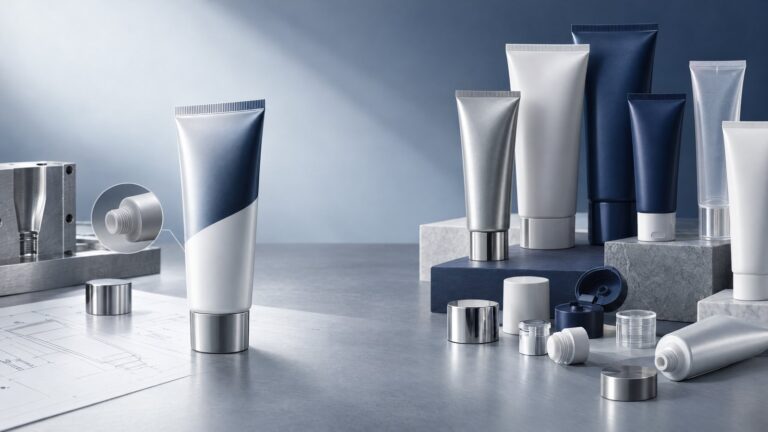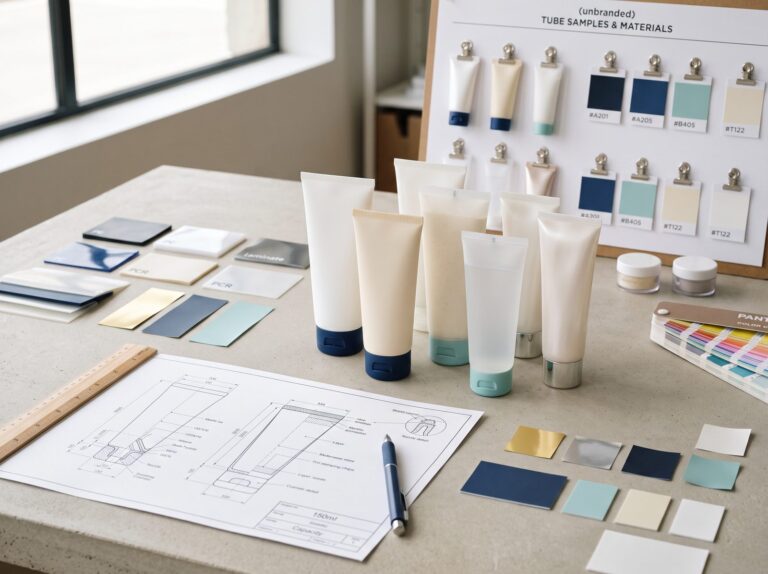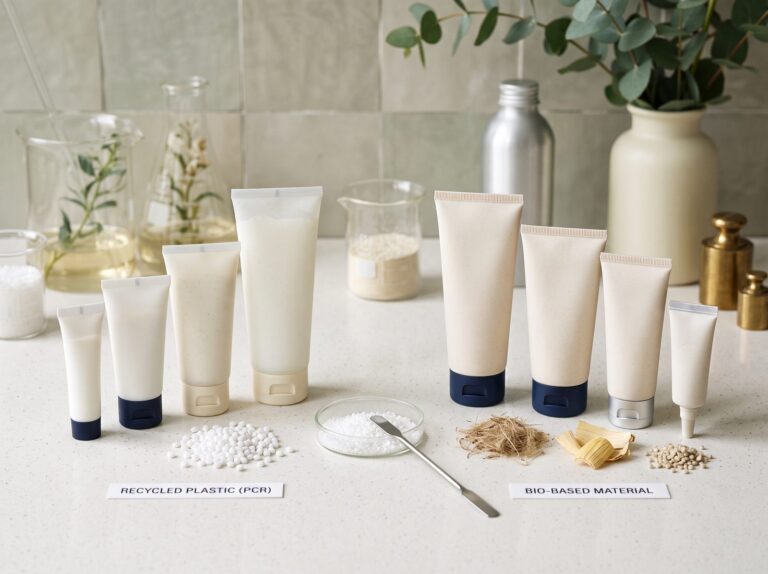
A cosmetic tube manufacturer is usually the stronger fit when your brand needs custom tube engineering, repeatable decoration, direct quality communication or production-scale coordination. A packaging distributor may be a better choice when you need several packaging categories, small mixed orders, local inventory or one intermediary to manage multiple suppliers. The right decision depends on your specifications, quantity, timeline, destination and level of support required—not on unit price alone.
Ключові висновки
- Choose a manufacturer for deeper control over tube structure, customization, sampling and production communication.
- Choose a distributor when supplier consolidation, mixed packaging categories, local stock or small order flexibility matters most.
- Compare landed cost and project risk, not just the quoted price per tube.
- Ask either supplier for the same specification, sample standard, quality documents and delivery assumptions.
What Is the Difference Between a Cosmetic Tube Manufacturer and a Packaging Distributor?
А виробник косметичних тюбиків produces tubes directly or manages the production process at its own manufacturing facility. The manufacturer typically works with your team on tube dimensions, materials, shoulder design, caps, printing, finishing, samples and production controls.
А packaging distributor sources products from one or more manufacturers and sells or coordinates them for brand customers. A distributor may offer a broader catalog, regional inventory, mixed packaging categories or a simpler purchasing process. Some distributors also provide design, quality coordination, logistics or filling support.
The distinction is not always absolute. Some packaging companies manufacture certain products and distribute others. Therefore, one of the first questions to ask is: Which parts of this project will your company manufacture, and which parts will it source from another supplier?
That answer affects communication, pricing, lead time, quality responsibility and how quickly technical changes can be made.
When Is a Cosmetic Tube Manufacturer the Better Choice?
A manufacturer is often the better choice when the tube itself is a critical part of your product or brand experience. Direct factory communication can be valuable when you need a specific material structure, unusual dimensions, premium decoration or repeatable results across multiple production runs.
1. You need deeper customization
A direct manufacturer may be able to review tube diameter, length, capacity, shoulder, opening, cap, applicator and decoration as one connected specification. This is useful when your formula has specific dispensing needs or when the package needs to fit a particular filling line.
Customization still depends on order quantity, tooling, material availability and production capability. Ask which options are standard, which require tooling and which change the MOQ or lead time.
2. You need technical sampling and development
A manufacturer can usually communicate more directly about drawings, samples, tooling and production feasibility. This does not guarantee that every request can be produced, but it can reduce the distance between your technical question and the person responsible for the production process.
For a new product, request a physical sample or a documented pre-production approval process. Review the tube shape, cap fit, squeeze feel, fill volume, print position, color and surface finish before approving mass production.
3. Printing and finishing are central to the project
If your packaging requires detailed artwork, multiple colors, metallic effects, embossing, debossing, soft-touch coating or a combination of finishes, factory-level communication can help clarify what is technically repeatable.
The supplier should explain artwork requirements, color references, proofing, minimum text size, barcode placement and how approved artwork is controlled for repeat orders. A beautiful digital rendering is not a substitute for a production-representative sample.
4. You expect repeat orders or production scale
A direct manufacturer may be more suitable when you expect regular replenishment, several tube sizes or a long-term packaging program. You can discuss capacity, approved reference samples, change control, batch documentation and repeat-order consistency earlier in the relationship.
This does not mean every manufacturer is better at repeat orders. Ask how the supplier records specifications and controls changes between batches.
When Can a Packaging Distributor Be the Better Choice?
A distributor can be a practical choice when your main need is sourcing breadth rather than factory-level customization.
1. You need several packaging categories
If your launch requires tubes, bottles, jars, closures, cartons and accessories, a distributor may simplify purchasing by coordinating multiple categories through one commercial contact. This can save time during early sourcing, especially for a small team.
However, convenience does not remove the need for technical review. Ask who manufactures each item, where quality checks happen and whether the same person manages specifications across all components.
2. You need small or mixed orders
Some distributors maintain stock or combine demand across customers. That may make them useful for a new brand testing a product, a buyer with multiple small SKUs or a company that does not yet have a reliable forecast.
A manufacturer may have a lower unit cost at production scale but a higher MOQ for a custom specification. A distributor may offer more flexibility, but the total cost can include handling, inventory, sourcing and logistics services. Compare the complete delivered cost.
3. You need local inventory or regional logistics
A distributor with inventory near your filling site or warehouse may reduce transit time and simplify replenishment. This can be important when the project has a short launch window or when the brand values local support.
Ask whether the stock matches your exact material, cap, decoration and dimensional requirements. A stocked tube that is close to your specification may not be suitable if the formula, filling line or branding requires a different configuration.
4. You want one commercial point of contact
A distributor can make it easier to manage quotations, purchase orders and shipping when several factories are involved. The trade-off is that technical questions may pass through an additional layer before reaching the actual producer.
Before selecting this model, clarify response times, escalation procedures, quality responsibility and how nonconformities are handled.
Manufacturer vs. Distributor: 8 Factors to Compare
| Фактор | Cosmetic tube manufacturer | Packaging distributor |
|---|---|---|
| Customization depth | Often stronger for tube structure, dimensions, caps, applicators and decoration development | Depends on the factory network and the distributor’s technical team |
| Мок | May require production MOQ or tooling thresholds for custom work | May offer stock, mixed orders or smaller quantities, but not always for custom designs |
| Unit price | May be competitive at production scale | May include sourcing, inventory, handling or coordination costs |
| Sampling and tooling | Usually closer to the drawing, sample and production process | Must clarify who owns tooling and who approves the production sample |
| Printing and finishing | Direct discussion with the production team may improve feasibility review | Options depend on the selected manufacturing partner |
| Quality documentation | Ask for factory-level inspection records, certificates and traceability | Ask whether documents apply to the actual producing factory and exact SKU |
| Час виконання | Often tied to artwork approval, tooling, production and shipping | May be faster from stock or longer when coordinating a new production run |
| After-sales responsibility | Usually communicates directly about production issues | Distributor manages the relationship, but escalation may involve another supplier |
The table is a starting point, not a universal rule. A highly capable distributor can provide excellent technical support, while a manufacturer can have limited flexibility for low-volume or multi-category projects. Verify the specific offer.
Which Option Fits Different Brand Situations?
A new skincare brand testing one custom tube
A distributor may be useful if you need a small quantity, several packaging components and quick access to standard products. A manufacturer may be the better long-term partner if the tube structure, decoration or repeat-order plan is already defined.
An established brand scaling a repeat SKU
A direct manufacturer is often worth evaluating because repeatability, capacity planning, change control and quality documentation become more important as volume grows. Compare the manufacturer’s production plan with your forecast rather than focusing only on the first-order quote.
A brand launching tubes plus bottles, jars and closures
A distributor or one-stop packaging partner may reduce the number of commercial relationships. Confirm that each component has a clear specification, sample approval process and quality owner. A single invoice does not automatically mean a single quality system.
A brand requiring premium printing or complex finishing
Start with suppliers that can explain the production method and show representative samples. Ask for color approval, artwork control and repeat-order standards. A direct manufacturer may offer more detailed feedback, but a distributor with a strong technical partner can also be suitable.
A brand needing smaller mixed orders or local stock
A distributor may be more practical if the priority is flexibility, availability or regional fulfillment. Confirm whether the available products meet your formula, filling and branding requirements before committing to a stock-based solution.
Questions to Ask Before Choosing Either Supplier
Use the same questions for every candidate so you can compare the sourcing models fairly:
- What is your role in this project? Will you manufacture the tube, source it or coordinate several factories?
- What material and structure do you recommend? Ask the supplier to explain the recommendation against your formula, capacity and use case.
- What are the MOQ and mixed-SKU rules? Request the MOQ for your exact diameter, cap, decoration and quantity.
- How does sampling work? Confirm sample type, sample fee, approval method, tooling and who owns the reference standard.
- How are artwork and color controlled? Ask about proofs, color references, file requirements and repeat-order approval.
- What quality checks apply? Request relevant test methods, inspection stages, certificates and traceability information.
- Who is responsible for production, packing and shipping? Put each handoff in writing.
- How are changes and complaints handled? Ask who approves specification changes and who manages corrective action.
- What is included in the quote? Request separate assumptions for tooling, samples, packaging, payment, freight and taxes.
Luxetubes’ existing guide, How to Choose a Cosmetic Tube Manufacturer, provides a more detailed nine-question supplier checklist. Use it alongside this article when you are ready to assess individual manufacturers.
How to Make a Fair Quote Comparison
The easiest way to compare a manufacturer and a distributor is to send both the same project brief. Include:
- Product category and a short description of the formula.
- Target tube material or the performance goal if you need a recommendation.
- Tube diameter, length, capacity and opening.
- Cap, applicator or closure preference.
- Printing colors, surface finish and artwork status.
- Initial quantity and expected repeat-order volume.
- Sample and tooling requirements.
- Delivery country, shipping destination and target date.
- Required tests, certifications or market documents.
Then compare the quotes on a landed-cost basis. Include the tube, cap, decoration, tooling, samples, packaging, freight, insurance, taxes and any service fees that apply. Also compare risk: an apparently lower price may not include the same inspection, documentation, delivery term or change-control support.
Do not ask one supplier to quote a standard stock tube and another to quote a fully custom tube, then compare the two unit prices. First make the specifications equivalent.
Why Luxetubes May Fit Direct-Manufacturing Projects
Luxetubes may be relevant for brands that want a direct custom cosmetic tube manufacturing route. The company’s public capabilities information lists PE, HDPE and laminated tube options, with tube diameters from 13 mm to 50 mm. It lists standard MOQs of 5,000 pieces for PE tubes and 10,000 pieces for laminated tubes, although project-specific requirements should be confirmed in the quotation.
The published process describes sample production in approximately 7–10 days and standard production in approximately 15 business days after artwork approval and deposit payment. Actual timing can change with the specification, tooling, quantity, approval cycle and shipping plan.
For decoration, Luxetubes lists offset and silk-screen printing of up to eight colors, along with options such as matte, gloss, soft-touch, hot stamping, metallic effects, embossing and debossing. These options should be reviewed against the actual tube material and artwork before approval.
The site also describes OEM and ODM support and a consultation, design/sample, production and delivery workflow. Its quality information references ISO 9001:2015, ISO 22716, leak and pressure testing and traceability. Buyers should request current, project-specific documentation and confirm which tests apply to their exact product.
You can review custom cosmetic tube manufacturing capabilities, cosmetic tube printing options and the one-stop packaging solution before preparing a quote request.
Часті запитання
Is buying directly from a cosmetic tube manufacturer always cheaper?
No. Direct manufacturing may be cost-effective at the right quantity and specification, but the total cost also depends on tooling, decoration, samples, freight, payment terms, inventory and quality requirements. A distributor may offer useful flexibility or local stock that reduces other costs. Compare equivalent specifications on a landed-cost basis.
What MOQ should I expect from a custom cosmetic tube manufacturer?
There is no single universal MOQ. It can change with the material, diameter, cap, decoration, tooling and production method. Ask for the MOQ tied to your exact specification. Standard stock products may have different quantity requirements from fully custom tubes.
Can a distributor arrange custom cosmetic tube production?
Yes, some distributors coordinate custom production through manufacturing partners. Ask who will make the tube, who owns the tooling, who approves the sample and who is responsible if the delivered product does not match the approved specification.
Should I choose a manufacturer or distributor for a new skincare brand?
Choose a manufacturer when the package needs custom engineering, distinctive decoration or a long-term production relationship. Choose a distributor when you need several packaging categories, smaller mixed orders, local availability or a simpler sourcing process. If both are possible, compare the same technical brief and total delivered cost.
What should I include in a cosmetic tube supplier quote request?
Include the product type, formula characteristics, tube diameter, capacity, length, material goal, cap, decoration, artwork status, order quantity, destination, target date and sample requirements. Also identify any testing, documentation or filling-line requirements.
Choose the Sourcing Model That Reduces Project Risk
The best supplier is not necessarily the one with the lowest initial price. It is the partner that gives you clear answers, an appropriate tube structure, a reliable sample process, documented quality controls and realistic delivery assumptions.
A manufacturer is often the better path for custom tube development, premium decoration and repeat production. A distributor can be the better path for mixed packaging, smaller orders, local inventory and supplier consolidation. In either case, make the manufacturing role, specifications, responsibilities and quote assumptions explicit before you place an order.
If you are planning skincare, hair-care, makeup or personal-care packaging, you can review Luxetubes’ skincare packaging solutions, makeup packaging solutions і quote request page. Include your product category, tube diameter and capacity, material preference, cap, decoration, quantity, destination and target launch date so the project can be evaluated against a complete brief.
Editorial note: This article provides a sourcing framework, not a final formula-compatibility, regulatory or filling recommendation. Confirm those decisions with your formula owner, filler, packaging supplier and relevant technical or regulatory advisors for the specific project.
Список літератури
- Google Search Central: Creating helpful, reliable, people-first content
- Impacked Packaging: Cosmetic Tube Packaging Suppliers
- Luxetubes: Cosmetic Tube Manufacturing Capabilities
- Luxetubes: Cosmetic Tube Printing Options
- Luxetubes: How to Choose a Cosmetic Tube Manufacturer
- Luxetubes: One-Stop Packaging Solution