
Abstrak
Die keuse van geskikte materiaal vir kosmetiese buisverpakking is 'n besluit van diepgaande gevolge vir 'n produk se stabiliteit, verbruikersaantrekkingskrag en omgewingsnalatenskap.
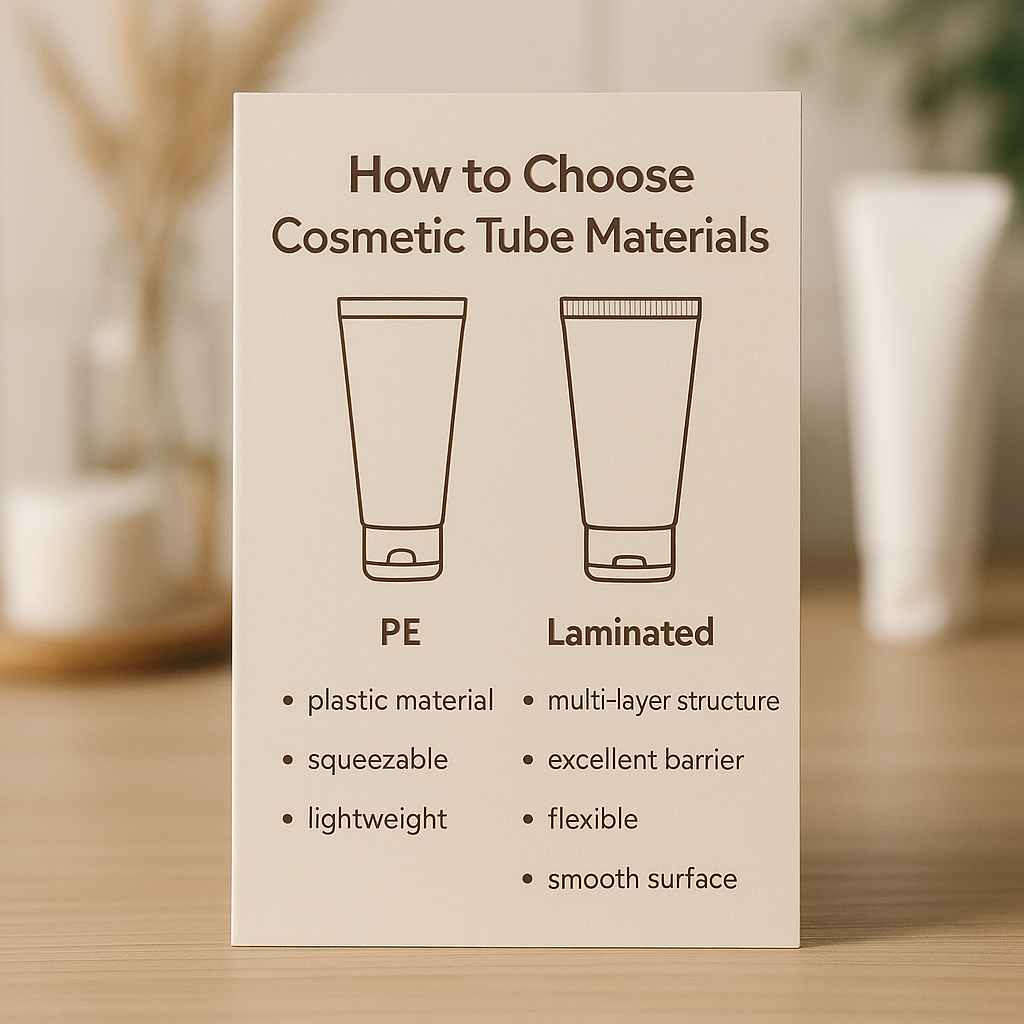
Hierdie ontleding ondersoek die veelvlakkige proses van hoe om kosmetiese buismateriaal te kies, deur die ingewikkelde balans tussen formuleringchemie, handelsmerk-estetika, gebruikerservaring en volhoubaarheidsvereistes te navigeer. Dit delf na die eienskappe van primêre materiale soos poliëtileen (PE) in sy verskillende digthede, sowel as gevorderde multi-laag en gelamineerde strukture (ABL, PBL) wat ontwerp is vir verbeterde versperringsbeskerming teen suurstof, lig en vog.
Die bespreking strek tot die groeiende domein van volhoubare materiale, insluitend Post-Consumer Resin (PCR), bio-plastiek soos suikerriet-gebaseerde PE, en die blywende rol van aluminium.
Deur materiaalkeuse te evalueer deur die lense van chemiese versoenbaarheid, funksionele werkverrigting, dekoratiewe potensiaal en voorsieningskettinglogistiek, bied hierdie gids 'n gestruktureerde raamwerk vir handelsmerkeienaars en produkontwikkelaars.
Die doelwit is om 'n ingeligte besluitnemingsproses te fasiliteer wat produkintegriteit beskerm, terwyl dit in lyn is met die ontwikkelende etiese en kommersiële eise van die 2025 globale mark.
Belangrike wegneemetes
- Pas jou produk se formule by die materiaal se versperringseienskappe om agteruitgang te voorkom.
- Evalueer volhoubare opsies soos PCR of suikerrietbuise om aan verbruiker se eko-verwagtinge te voldoen.
- Oorweeg hoe materiaal buigsaamheid en afwerking die eindgebruiker se ervaring sal beïnvloed.
- Maak seker dat die gekose materiaal versoenbaar is met die gewenste drukwerk en dekoratiewe effekte.
- Om te leer hoe om kosmetiese buismateriaal te kies, behels die balansering van koste, kwaliteit en handelsmerkwaardes.
- Werk saam met 'n kundige vervaardiger om komplekse materiaalspesifikasies en verkryging te navigeer.
- Faktor in die hele pakket, insluitend pette en toedieners, vir 'n samehangende ontwerp.
Inhoudsopgawe
- Faktor 1: Belyn materiaaleienskappe met produkformule-versoenbaarheid
- Faktor 2: Navigeer deur die kompleksiteite van volhoubaarheid en ekobewuste keuses
- Faktor 3: Oorweging van die gebruikerservaring en resepteringsfunksionaliteit
- Faktor 4: Evaluering van versiering, handelsmerk en estetiese potensiaal
- Faktor 5: Ontleding van die voorsieningsketting, vervaardiging en koste-implikasies
- Gereelde Vrae (Gereelde Vrae)
- Konklusie
- Verwysings
Faktor 1: Belyn materiaaleienskappe met produkformule-versoenbaarheid
Die besluit oor hoe om kosmetiese buismateriaal te kies, begin nie met estetika of koste nie, maar met 'n diep en nugter ondersoek van chemie. Die buis is nie bloot 'n houer nie; dit is die primêre omgewing waarin jou formule sal leef vanaf die oomblik van sy skepping tot die finale gebruik daarvan.
'n Wanoordeel op hierdie grondslagstadium kan lei tot gekompromitteerde doeltreffendheid, veranderde sensoriese profiele, of selfs volledige produk mislukking.
Die verhouding tussen die formule en sy verpakking is 'n intieme, deurlopende dialoog, en die materiaal van die buis dikteer die terme van daardie gesprek. Om wys te kies, is om op te tree as 'n verantwoordelike rentmeester van die produk wat jy so noukeurig ontwikkel het.
Die grondliggende rol van poliëtileen (PE) in kosmetiese buise
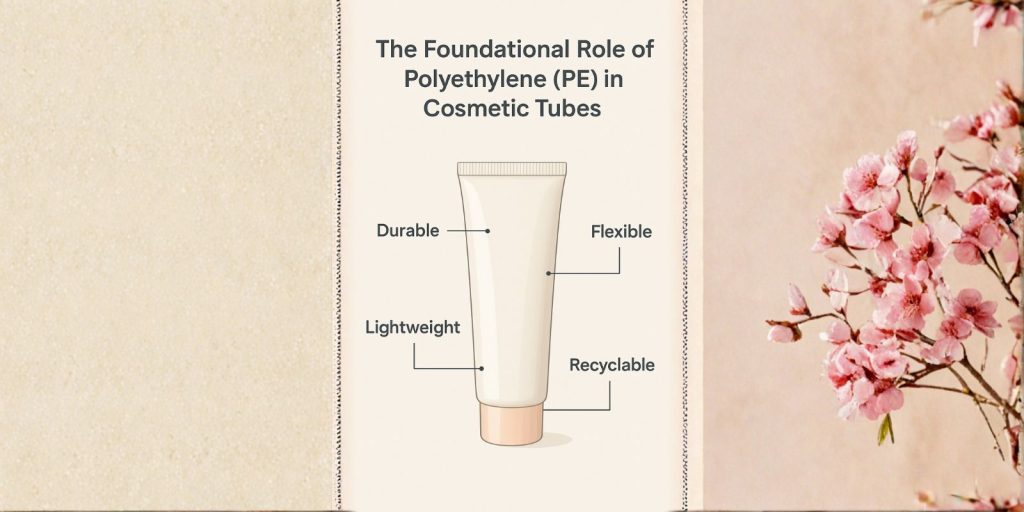
Poliëtileen verteenwoordig die basis van kosmetiese buisvervaardiging. Die alomteenwoordigheid daarvan is 'n bewys van sy veelsydigheid, kostedoeltreffendheid en goed verstaanbare eienskappe.
Tog, om van te praat “PE” as 'n monoliet is om die kritieke onderskeidings wat dit geskik maak vir so 'n wye verskeidenheid produkte, oor die hoof te sien. Kom ons kyk na die twee primêre variante wat u sal teëkom:
- Lae-digtheid poliëtileen (LDPE): Stel jou die gevoel van 'n sagte, buigbare handroombuis voor. Daardie bevredigende maklike druk is dikwels die werk van LDPE. Sy molekulêre struktuur word gekenmerk deur aansienlike vertakking, wat verhoed dat die polimeerkettings styf saampak. Dit lei tot laer digtheid en groter buigsaamheid. Dit is 'n uitstekende keuse vir algemene velsorg soos lotions en ys waar 'n hoëvlak chemiese versperring nie die primêre bekommernis is nie.
- Hoë-digtheid poliëtileen (HDPE): Daarteenoor het HDPE 'n meer lineêre molekulêre struktuur met minimale vertakking. Dit laat die kettings toe om nou te pak, wat 'n materiaal skep wat meer rigied, robuust en ondeursigtig is as LDPE. Dit bied effens beter chemiese weerstand, wat dit geskik maak vir produkte soos sjampoe of sommige skoonmaakmiddels. Dink aan 'n buis wat stewig op 'n rak moet staan sonder om in te sak—HDPE verskaf daardie strukturele integriteit.
Die keuse tussen LDPE, HDPE, of 'n mengsel van die twee (dikwels na verwys as MDPE) is jou eerste belangrike besluit. Dit vereis dat u die viskositeit van u produk en die gewenste gebruikerservaring in ag neem.
'n Dun, waterige serum in 'n baie sagte LDPE-buis kan te vinnig afgee, terwyl 'n dik, digte balsem in 'n stywe HDPE-buis vir die verbruiker frustrerend kan wees om te gebruik.
| Materiaal | Sleutel kenmerke | Algemene toepassings | Versperringseienskappe |
|---|---|---|---|
| LDPE | Sag, buigsaam, deurskynend, goeie vogversperring. | Handroom, lotions, gesigsreinigers, lyfwas. | Lae versperring vir suurstof en organiese verbindings. |
| HDPE | Styf, sterk, ondeursigtig, beter chemiese weerstand as LDPE. | Sjampoe, opknappers, groter-formaat produkte wat stabiliteit vereis. | Matige versperring; beter as LDPE maar steeds deurlaatbaar. |
| PBL | Alles van plastiek, uitstekend “terugslag” (keer terug na vorm), goeie versperring opsies. | Sonskerms, premium velsorg, farmaseutiese salwe. | Goed tot uitstekend, afhangende van EVOH-laagdikte. |
| ABL | Aluminiumfoelielaag, uitstekende versperring, geen terugslag nie (“doodvou”). | Tandepasta, haarkleur, aggressiewe formules (bv. hoë-krag aktiewe stowwe). | Die beste moontlike versperring teen lig, suurstof en vog. |
Verstaan multi-laag en gelamineerde buise vir versperringsbeskerming
Vir 'n aansienlike gedeelte van moderne kosmetiese formulerings is 'n eenvoudige mono-laag PE-buis onvoldoende. Aktiewe bestanddele soos vitamien C (askorbiensuur), retinoïede, benzoylperoksied en baie natuurlike essensiële olies is hoogs sensitief. Hulle kan afgebreek word deur blootstelling aan suurstof, UV-lig, of selfs deur interaksie met of migreer deur die plastiek van die buis self. Dit is hier waar die vindingrykheid van multi-laag en gelamineerde buise onontbeerlik word.
Dink aan 'n multi-laag buis as 'n gesofistikeerde toebroodjie van polimere, elke laag verrig 'n spesifieke funksie.
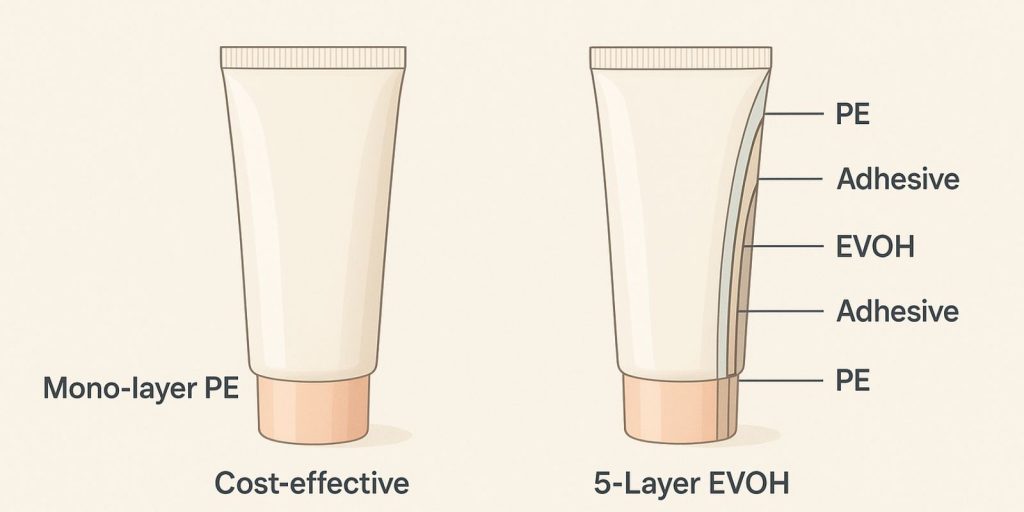
'n Tipiese 5-laag mede-geëxtrudeerde buis bestaan uit 'n buitenste laag PE vir drukbaarheid en gevoel, 'n binnelaag PE vir formule kontak, twee gom of “das” lae, en, veral, 'n sentrale versperringslaag.
Die mees algemene versperringsmateriaal wat gebruik word, is Etielvinielalkohol (EVOH). EVOH is uitsonderlik in sy vermoë om die deurgang van suurstof en ander gasse te blokkeer.
Die teenwoordigheid van hierdie onsigbare interne skild is wat 'n sensitiewe antioksidante serum kragtig hou of keer dat die kenmerkende geur van 'n pepermentvoetroom mettertyd verdwyn.
Gelamineerde buise neem hierdie konsep 'n stap verder en word oor die algemeen in twee tipes gekategoriseer:
- Aluminium versperringslaminaat (ABL): Soos die naam aandui, bevat ABL-buise 'n dun laag aluminiumfoelie, tipies tussen lae plastiek vasgedruk. Hierdie aluminiumlaag bied 'n byna absolute versperring vir lig, suurstof, vog en vlugtige organiese verbindings. Dit is die goue standaard vir beskerming. Dit is hoekom produkte soos tandepasta, haarkleurmiddels en sekere farmaseutiese salwe histories ABL-buise gebruik het. Die materiaal het 'n kenmerk “doodvou,” wat beteken dat dit opgefrommel bly wanneer dit ingedruk word en nie terugspring nie, wat gebruikers kan help om die hele produk uit te gee.
- Plastiekversperringslaminaat (PBL): PBL-buise vervang die aluminiumlaag met 'n plastiese versperring, gewoonlik EVOH. Hierdie buise bied uitstekende versperringseienskappe—dikwels voldoende vir die meeste kosmetiese produkte—terwyl hulle 'n meer estetiese “terugslag” of “terugspring” kwaliteit. Hulle keer terug na hul oorspronklike vorm nadat hulle uitgedruk is, wat baie verbruikers meer visueel aantreklik vind. Verder, aangesien hulle uit 'n enkele familie van materiale (plastiek) gebou is, kan hulle 'n meer eenvoudige herwinningspad bied as ABL-buise, 'n punt wat ons later sal ondersoek.
Gevallestudie: Kies tussen 'n mono-laag PE en 'n 5-laag EVOH-buis
Kom ons neem deel aan 'n gedagte-eksperiment. Gestel jy ontwikkel 'n nuwe, hoë-end gesigbevogtiger. Die “held” bestanddeel is 'n delikate, duur botaniese uittreksel wat bekend is vir sy strelende eienskappe.
Die formule bevat ook 'n ligte, natuurlike geur afkomstig van sitrus-essensiële olies.
Jou aanvanklike gedagte kan wees om 'n eenvoudige, koste-effektiewe LDPE-buis te gebruik. Dit voel lekker en is ekonomies. 'n Dieper ontleding toon egter potensiële probleme. Die sitrus-essensiële olies bevat verbindings soos limoneen, wat met verloop van tyd, “kopvel” die produk (wat beteken dat die geurkomponente in die plastiek opgeneem word) of selfs deur die buiswand migreer, wat lei tot 'n verlies aan reuk.
Meer krities, die kosbare botaniese uittreksel kan vatbaar wees vir oksidasie. As suurstof uit die buitelug stadig die LDPE-muur kan deurdring, sal die ekstrak afbreek en sy doeltreffendheid verloor lank voor die produk se vervaldatum. Die kliënt, nadat hy 'n premium prys betaal het, sou 'n minder effektiewe, ongegeurde room gelaat word.
Oorweeg nou 'n 5-laag buis met 'n EVOH versperring. Die binneste PE-laag is inert en veilig vir formulekontak. Die EVOH-laag dien as 'n vesting, wat verhoed dat die sitrusgeur ontsnap en, nog belangriker, keer dat atmosferiese suurstof binnedring.
Die buitenste PE-laag bied 'n pragtige oppervlak vir die druk van jou handelsmerk se logo. Terwyl die koste per eenheid van hierdie buis hoër is, verseker dit die produk se integriteit en kwaliteit dwarsdeur sy lewensiklus.
Dit beskerm die kliënt se belegging en, by uitbreiding, jou handelsmerk se reputasie. Dit is 'n duidelike voorbeeld van hoe om kosmetiese buismateriaal te kies, nie gebaseer op aanvanklike koste nie, maar op totale waarde en risikoversagting.
Die chemiese dans: hoe aktiewe bestanddele met verpakking in wisselwerking tree
Die interaksie tussen 'n kosmetiese formule en sy houer is 'n komplekse chemiese dans. Dit gaan nie altyd oor die beskerming van die formule van die buitewêreld nie; soms gaan dit daaroor om die houer teen die formule te beskerm. Sekere aggressiewe bestanddele kan die verpakkingsmateriaal self aanval.
Byvoorbeeld, formules met 'n baie hoë of baie lae pH, of dié wat sekere oplosmiddels of sterk essensiële olies bevat (soos teeboom of wintergroen), kan swelling, krake of delaminering in 'n onbehoorlik gekose buis veroorsaak.
Dit is hoekom versoenbaarheidstoetsing nie 'n opsionele stap is nie; dit is 'n verpligte deel van die produkontwikkelingsproses.
Hierdie toets behels tipies die vul van die gekose buis met die finale formule en plaas dit in stabiliteitskamers wat versnelde veroudering simuleer (bv. hoë temperature van 40-50°C) vir 'n tydperk van 1 tot 3 maande. Gedurende hierdie tyd word die produk periodiek nagegaan vir enige veranderinge in kleur, reuk, viskositeit en pH.
Die buis self word ook ondersoek vir enige fisiese veranderinge soos panele (inval), swelling, krake by die seël, of gewigsverlies (wat aandui dat produkkomponente ontsnap).
'n Suksesvolle toets gee jou die vertroue dat die dans tussen jou formule en sy pakket 'n harmonieuse een sal wees.
Faktor 2: Navigeer deur die kompleksiteite van volhoubaarheid en ekobewuste keuses
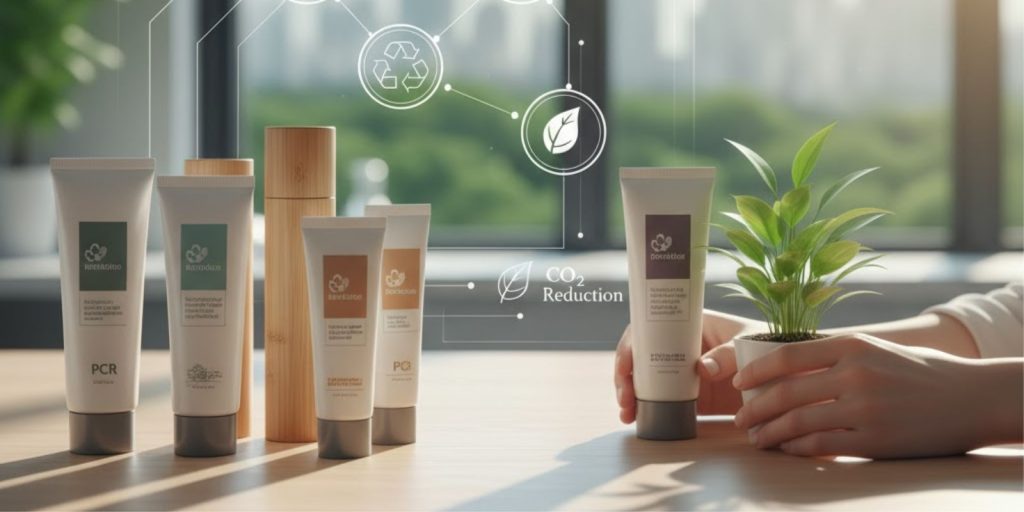
In 2025 is 'n handelsmerk se standpunt oor volhoubaarheid nie meer 'n perifere bemarkingsverhaal nie; dit is 'n kernkomponent van sy identiteit en 'n beduidende dryfveer van verbruikerskeuse. Die verpakking, synde die mees tasbare en weggooibare element van 'n produk, is onder intensiewe ondersoek.
'n Geskatte 120 miljard eenhede skoonheidsverpakking word jaarliks geproduseer, met 'n oorgrote meerderheid wat op stortingsterreine beland (Topfeelpack, 2024). Daarom is die vraag oor hoe om kosmetiese buismateriaal te kies onlosmaaklik gekoppel aan vrae oor ekologiese verantwoordelikheid. Dit is nie 'n eenvoudige kwessie van 'n keuse nie “groen” materiaal, maar om die genuanseerde lewensiklus en afwegings van elke opsie te verstaan.
Post-verbruikersharse (PCR): Balanseer herwinde inhoud met prestasie
Post-Consumer Resin (PCR) is plastiek wat uit verbruikersafval herwin is—dink aan melkkanne, waterbottels en ander eenmalige houers wat versamel, skoongemaak, gesorteer en weer verpille is.
Die inkorporering van PCR in jou kosmetiese buise is 'n kragtige manier om deel te neem aan die sirkulêre ekonomie. Dit verminder die vraag na nuwe, fossielbrandstof-gebaseerde plastiek en lei afval van stortingsterreine af.
Werk met PCR vereis egter 'n mate van tegniese begrip en buigsaamheid.
- Estetiese variasies: PCR is nie 'n ongerepte, eenvormige materiaal nie. Omdat dit uit 'n gemengde stroom herwinde goedere kom, kan dit effense kleurvariasies hê. 'n Buisie wat met 'n hoë persentasie PCR gemaak is, kan 'n dowwe grys of gelerige tint hê en kan klein, skaars sigbare “swart spikkels.” Vir 'n handelsmerk wat 'n suiwer, sneeuwit buis benodig, kan dit 'n uitdaging wees. Baie handelsmerke omhels egter hierdie estetiese, en noem dit selfs in hul bemarking as 'n visuele aanduiding van hul verbintenis tot volhoubaarheid.
- Strukturele oorwegings: Terwyl moderne verwerking PCR-werkverrigting byna identies aan maagdelike hars gemaak het, kan daar subtiele verskille in verwerking en strukturele integriteit wees. Dit is noodsaaklik om met 'n verskaffer te werk wat kundigheid het in die vervaardiging met PCR om die buis se duursaamheid te verseker, veral by die seël en skouer.
- Persentasie inhoud: Buise kan gemaak word met verskillende persentasies PCR, van 10% tot 100%. Hoe hoër die persentasie, hoe groter is die omgewingsvoordeel, maar ook hoe meer uitgesproke is die potensiële estetiese variasies. 'n Algemene benadering is om PCR te gebruik vir die buitenste lae van 'n multi-laag buis, terwyl die binneste, produk-kontaklaag gemaak van maagdelike hars gehou word om suiwerheid en verenigbaarheid te waarborg.
Die keuse om PCR te gebruik is 'n stelling. Dit vertel die verbruiker dat jy aktief verantwoordelikheid neem vir die verpakkingslewensiklus.
| Volhoubare materiaal | Primêre voordeel | Sleuteloorweging | Beste vir… |
|---|---|---|---|
| PCR Plastiek | Verminder vermorsing, ondersteun sirkulêre ekonomie. | Potensiaal vir geringe kleur/konsekwentheid variasies. | Handelsmerke wat 'n tasbare impak op plastiekafval wil maak. |
| Suikerriet PE | Gemaak van 'n hernubare hulpbron, koolstof-negatiewe produksie. | Chemies identies aan fossiel PE; nie bioafbreekbaar nie. | Drop-in vervanging vir konvensionele PE om koolstofvoetspoor te verminder. |
| Aluminium | Oneindig herwinbaar met hoë herwinningsyfers. | Hoër energieverbruik in primêre produksie; kan maklik duik. | Maksimum produkbeskerming en dra 'n premium/vintage-gevoel oor. |
| PBL (Herwinbaar) | Alle plastiek konstruksie kan ontwerp word vir herwinning van strome. | EVOH-versperring kan herwinning in sommige stelsels bemoeilik. | Handelsmerke wat goeie versperringsbeskerming in 'n monomateriaal-agtige formaat benodig. |
Bio-Plastics: Die belofte en gevaar van suikerriet en PLA
Die term “bio-plastiek” kan verwarrend wees, aangesien dit verskillende materiale met baie verskillende eienskappe en lewenseinde-scenario's insluit. Dit is van kardinale belang om die onderskeid te verstaan.
Een van die mees belowende bio-plastiek vir kosmetiese buise is suikerriet-gebaseerde poliëtileen. Hierdie materiaal is 'n bio-gebaseerde wonder. Tydens sy groei vang die suikerrietplant CO2 uit die atmosfeer op.
Hierdie suikerriet word dan verwerk om etanol te produseer, wat daarna in etileen en dan poliëtileen omgeskakel word.
Die resultaat is 'n plastiek wat chemies en fisies identies is aan tradisionele, fossielbrandstof-afgeleide PE. Dit beteken dit kan gebruik word as 'n “inloop” vervanging sonder enige behoefte vir hertoetsing van formule-versoenbaarheid of verandering van vervaardigingsprosesse. Dit is ook ten volle herwinbaar in die bestaande PE-herwinningstroom (nr. 2 en nr. 4). Die primêre voordeel daarvan is sy hernubare oorsprong en sy rol in die vermindering van die koolstofvoetspoor van die verpakking.
Nog 'n bekende bio-plastiek is Polimelksuur (PLA). PLA word dikwels van mieliestysel afgelei en word daarvoor geprys “bioafbreekbaar.”
Hierdie term kom egter met 'n beduidende voorbehoud. PLA sal slegs bioafbreek onder die spesifieke hoë hitte toestande van 'n industriële komposfasiliteit.
Dit sal nie in 'n agterplaas komposhouer afbreek nie, en sal ook nie in 'n stortingsterrein afbreek of as dit in die see beland nie. Verder, as PLA verkeerdelik in die standaard plastiekherwinningsstroom geplaas word, kan dit die hele groep PET of PE besoedel, wat dit nutteloos maak.
Om hierdie redes, terwyl PLA 'n interessante materiaal vir sekere toepassings is (soos eenmalige voedseldiensitems in 'n geslote lusstelsel), is dit dikwels 'n problematiese keuse vir wydverspreide verbruikersgoedere soos skoonheidsmiddels.
Wanneer bioplastiek oorweeg word, maak die duidelikheid van suikerriet PE se lewensiklus - hernubare bron, invalprestasie en standaardherwinbaarheid - dit dikwels 'n meer verantwoordelike en minder verwarrende keuse vir verbruikers as PLA.
Die aluminiumvraag: Herwinbaarheid, gewig en beskerming
Aluminiumbuise wek 'n gevoel van erfenis, kwaliteit en farmaseutiese doeltreffendheid. Hulle bied ongeëwenaarde versperringsbeskerming, soos vroeër bespreek.
Vanuit 'n volhoubaarheidsperspektief is aluminium se grootste bate sy oneindige herwinbaarheid. Dit kan oor en oor gesmelt en omskep word in nuwe aluminiumprodukte sonder verlies aan kwaliteit. Die herwinningsyfers vir aluminium is ook oor die algemeen hoër as vir baie plastiek in Noord-Amerika en Europa.
Die uitruil lê in die aanvanklike produksie daarvan. Die skep van primêre aluminium uit bauxieterts is 'n uiters energie-intensiewe proses. Terwyl die gebruik van herwonne aluminium hierdie energiebehoefte aansienlik verminder (met tot 95%), kan die voorsieningsketting vir 100% herwonne aluminiumbuise kompleks wees.
Daarbenewens is aluminiumbuise swaarder as hul plastiek-eweknieë, wat verskepingsverwante koolstofvrystellings kan verhoog. Hulle neiging om te duik en kreukel, terwyl die verskaffing van die funksionele “doodvou,” kan gesien word as 'n estetiese nadeel deur sommige handelsmerke wat streef na 'n slanke, ewig perfekte voorkoms.
Vir ander, hierdie “wabi-sabi” kwaliteit van 'n goed gebruikte aluminiumbuis is deel van sy sjarme.
Ontwerp vir herwinbaarheid: 'n holistiese benadering verder as materiaalkeuse
Ware volhoubare ontwerp vereis dat aan die hele pakket gedink word, nie net die buisliggaam nie. Dit is die beginsel van “Ontwerp vir herwinbaarheid” (DfR). 'n Volmaak herwinbare PE-buis kan nie-herwinbaar gemaak word deur die verkeerde keuse van pet, huls of etiket.
Oorweeg hierdie faktore:
- Materiaal kombinasie: Die ideale herwinbare pakket is a “monomateriaal” een, waar die buis, skouer en dop almal van dieselfde tipe plastiek gemaak is (bv. almal PE of alle PP). Wanneer materiale gemeng word, kan die outomatiese sorteerstelsels by herwinningsfasiliteite verwar word, wat die pakkie dikwels na die stortingsterrein stuur.
- Die pet: As die buisliggaam PE is, is die doppie ook PE? Of is dit Polipropileen (PP)? Alhoewel sommige gevorderde fasiliteite dit kan skei, is 'n monomateriaal benadering altyd veiliger. Wat van 'n gemetalliseerde pet op 'n plastiekbuis? Dit is 'n algemene punt van besoedeling.
- Etikette en moue: 'n Vollyf-krimphuls gemaak van PVC of PETG op 'n PE-buis sal die hele pakket nie-herwinbaar maak. Die moumateriaal is 'n kontaminant. As 'n etiket nodig is, moet dit klein wees en gemaak word van 'n versoenbare materiaal met wasbare gom, sodat dit tydens die herwinningsproses verwyder kan word.
- Kleur: Donker, koolstofswart plastiek kan onsigbaar wees vir die infrarooi (NIR) sorteertegnologie wat in baie herwinningsfasiliteite gebruik word. Dit beteken dat 'n swart PE-buis, hoewel tegnies herwinbaar, outomaties vir stortingsterrein gesorteer kan word. Die keuse van ligter kleure of die gebruik van koolstofvrye swart pigmente kan hierdie probleem oplos.
Die keuse van 'n volhoubare pad behels 'n dialoog met jou verpakking verskaffer.
Vra hulle oor monomateriaal-opsies, herwinbare dopkeuses en pigmente wat versoenbaar is met sorteerstelsels. Hierdie dieper vlak van ondersoek is 'n kenmerk van 'n werklik verantwoordelike handelsmerk.
Faktor 3: Oorweging van die gebruikerservaring en resepteringsfunksionaliteit

Die materiaal van 'n kosmetiese buis is nie 'n passiewe vaartuig nie; dit is 'n aktiewe deelnemer aan die daaglikse ritueel van produkgebruik. Sy tasbare eienskappe, sy buigsaamheid en die manier waarop dit met die sluitingstelsel saamwerk, dra alles by tot die verbruiker se onderbewuste oordeel van die produk se kwaliteit en wenslikheid.
'n Pragtig geformuleerde room in 'n verpakking wat moeilik of onaangenaam is om te gebruik, sal nie terugkoop inspireer nie. Daarom moet 'n diepgaande empatie vir die eindgebruiker se ervaring die proses lei van hoe om kosmetiese buismateriaal te kies.
Die drukfaktor: Materiaalbuigsaamheid en produkviskositeit
Die mees fundamentele interaksie wat 'n verbruiker met 'n buis het, is om dit te druk. Die hoeveelheid krag wat benodig word, die manier waarop die buis meegee, en hoe dit sy vorm herstel, word alles bepaal deur materiaalkeuse en wanddikte.
Hierdie “druk faktor” moet geharmoniseer word met die viskositeit van jou formule.
Stel jou 'n baie dun, vloeistofagtige serum voor. As dit in 'n baie sagte, dunwandige LDPE-buis verpak word, kan 'n sagte, toevallige druk in 'n grimeringsak 'n aansienlike hoeveelheid produk laat uitlek.
Vir so 'n formule kan 'n effens meer rigiede materiaal soos MDPE of selfs 'n PBL-buis wat meer gekontroleerde reseptering bied meer gepas wees. Die gebruiker moet voel dat hulle in beheer is van hoeveel produk geresepteer word, druppel vir druppel.
Omgekeerd, oorweeg 'n dik, pastaagtige kleimasker. Om dit in 'n stewige HDPE-buis te verpak, sal 'n funksionele ramp wees.
Die gebruiker sal aansienlike krag moet uitoefen om die produk uit te gee, en namate die buis leeg raak, sal dit byna onmoontlik word om die laaste 20-30% van die masker uit te kry. Dit lei tot klantefrustrasie en produkvermorsing.
Vir so 'n hoë-viskositeit produk is 'n sagte, hoogs buigsame LDPE-buis ideaal. 'n Selfs beter keuse kan 'n ABL-buis wees, wie se “doodvou” kenmerk laat die gebruiker toe om die buis van onder af op te rol, om te verseker dat elke laaste stukkie van die produk maklik onttrek kan word.
Hierdie balanseerhandeling is 'n kritieke aspek van gebruikergesentreerde ontwerp. Jy moet geestelik (en fisies) deur die gebruiksproses van die produk loop vanaf die eerste toediening tot die laaste.
Hoe verander die gevoel van die buis soos dit leeg raak? Word dit moeilik om te hanteer? Behou dit sy estetiese aantrekkingskrag?
Dop, pomp of toediener? Hoe sluitings materiaalkeuse beïnvloed
Die buis werk nie in isolasie nie. Dit vorm 'n stelsel met sy sluiting—of dit nou 'n eenvoudige skroefdop, 'n flip-top, 'n doseerpomp of 'n gespesialiseerde toediener is. Die keuse van sluiting kan spesifieke eise aan die buismateriaal en struktuur stel.
- Standaarddoppies (opskroef/flip-top): Dit is die mees algemene sluitings en is versoenbaar met die wydste reeks buismateriaal. Die hoofoorweging hier is die “draad” op die buis se nek of “kop.” Die materiaal moet robuust genoeg wees om die herhaalde wringkrag van oop- en toemaak te hanteer sonder om te stroop of te kraak.
- Dispenseerpompe (lugloos of standaard): Pompe word dikwels gebruik vir hoëwaarde lotions en serums om presiese, afgemete dosering te verskaf. 'n Luglose pompstelsel, wat 'n stygende suier binne die buis gebruik, vereis dikwels 'n meer stewige buisstruktuur (soos PBL of 'n dikkerwandige PE) om korrek te funksioneer en te verhoed dat die buiswande na binne ineenstort terwyl die produk gebruik word.
- Spesiale toedieners: Die mark is ryk aan innoverende toedieners wat direk in die buiskop geïntegreer is: keramiek- of metaalrolballetjies vir verkoeling van oogrome, silikoonknoppe vir massering in behandelings, of borselpunte vir kolverbloemers. Hierdie toedieners vereis dikwels 'n spesifieke kop- en skouerontwerp op die buis. Die buismateriaal moet betroubaar aan hierdie meer komplekse kopstyle gevorm en gesweis kan word. Byvoorbeeld, 'n swaar metaal toediener kan beter ondersteun word deur 'n stewiger PBL of HDPE buisskouer as 'n baie sagte LDPE een.
Die integrasie van buis en sluiting is 'n tegniese vennootskap. Wanneer jy 'n innoverende toediener oorweeg, moet jy vroeg in die proses die vereistes daarvan met jou buisvervaardiger bespreek.
Hulle kan raad gee oor watter materiaal suksesvol met jou verlangde sluiting gekoppel kan word om 'n naatlose en betroubare gebruikerservaring te skep. Dit is waar vennootskap met 'n volledige diensverskaffer van kosmetiese buisverpakkingsoplossings word van onskatbare waarde, aangesien hulle die verenigbaarheid van alle komponente kan verseker.
'n Tikkie luukse: die tasbare en estetiese eienskappe van materiale
Behalwe vir suiwer funksionaliteit, kommunikeer die gevoel van die buis in die hand 'n magdom inligting oor die handelsmerk. Hierdie tasbare ervaring, of “haptics,” is 'n kragtige, indien subtiele, bemarkingsinstrument.
'n Standaard glans PE-buis voel skoon, doeltreffend en bekend. Dit is die standaard vir 'n rede. 'n Buis met 'n “sagte aanraking” of mat afwerking voel heeltemal anders.
Dit is fluweelagtig, premium, en gly nie. Dit spreek van ingetoë luukse en 'n moderne estetika. Hierdie afwerking word tipies bereik deur 'n spesiale lak of deklaag as 'n laaste stap in die versieringsproses by te voeg, en die hegting en lang lewe daarvan kan wissel na gelang van die onderliggende buismateriaal.
PBL-buise, met hul gladde, naatlose liggame en bevredigende terugslag, voel dikwels meer aansienlik en duurder as 'n basiese PE-buis. Die effense bykomende gewig en perfekte vormherstel na 'n druk dra by tot 'n persepsie van kwaliteit.
Aluminium, met sy koel metaalagtige aanraking en bevredigende krag, kommunikeer doeltreffendheid, beskerming, en dikwels 'n verbintenis met apteker of farmaseutiese tradisies.
Die manier waarop dit sy vorm behou en die geskiedenis van die gebruik daarvan in sy plooie en voue aanteken, kan 'n persoonlike verbinding met die gebruiker skep.
Wanneer jy 'n materiaal kies, moenie net na 'n spesifikasieblad kyk nie. Vra vir monsters. Hou hulle vas. Druk hulle. Maak jou oë toe en fokus op die tasbare sensasie. Stem hierdie gevoel ooreen met jou handelsmerk se storie?
Voel dit soos 'n $10 handroom of 'n $90 anti-verouderingsbehandeling? Hierdie empatiese, sensories-gebaseerde evaluering is 'n deurslaggewende stap in die maak van 'n keuse wat op 'n emosionele vlak by verbruikers aanklank vind.
Faktor 4: Evaluering van versiering, handelsmerk en estetiese potensiaal

'n Kosmetiese buis is 'n leë doek. Die kunswerk, kleure en teksture wat op die oppervlak daarvan toegepas word, is wat dit van 'n generiese houer in 'n kragtige ambassadeur vir jou handelsmerk verander. Dit is die eerste ding wat 'n klant op die rak sien en 'n konstante handelsmerk raakpunt op hul badkamertoonbank.
Die materiaal wat jy vir jou buis kies, het 'n direkte en diepgaande impak op die dekoratiewe tegnieke wat tot jou beskikking is, en uiteindelik op die visuele storie wat jy kan vertel.
'n Deurdagte benadering tot hoe om kosmetiese buismateriaal te kies, behels die voorstelling van die finale versierde produk van die begin af.
Drukmoontlikhede: Offset, syskerm en warm stempel op verskillende materiale
Die drie mees algemene metodes vir versier kosmetiese buise elkeen het hul eie sterkpunte en is geskik vir verskillende materiale en ontwerpdoelwitte.
- Droë offset druk: Dit is die werkesel van buisversiering. Dit is 'n hoëspoedproses waar tot 8 kleure gelyktydig aangewend kan word. Dit is ideaal vir fotorealistiese beelde, komplekse gradiënte en ontwerpe wat presiese kleurregistrasie vereis. Offsetdruk lê 'n relatief dun laag ink neer, wat dit baie koste-effektief maak vir groot lopies. Dit werk pragtig op die gladde, egalige oppervlaktes van beide geëxtrudeerde PE en gelamineerde (PBL/ABL) buise. Vir gelamineerde buise is die kunswerk tipies “omgekeerde gedruk” aan die onderkant van die boonste plastieklaag voordat dit in 'n buis gevorm word, wat die kunswerk teen skrape en slytasie beskerm.
- Syskermdruk: As jy gewaagde, lewendige kleure met 'n tasbare, verhoogde effek wil hê, is syskermdruk die voortreflike keuse. In hierdie proses word ink een kleur op 'n slag deur 'n fyn maasskerm op die buis gedruk. Hierdie metode lê 'n dik, ondeursigtige laag ink neer, wat dit perfek maak om helder wit of helder kleure op 'n donker- of gekleurde buis te verkry. Dit gee 'n premium, tekstuurgevoel wat offsetdrukwerk nie kan herhaal nie. Alhoewel dit stadiger en dikwels duurder is as verreken, is die kwaliteit daarvan tasbaar. Dit kleef goed aan PE-, PBL- en ABL-buise, alhoewel oppervlakbehandelings nodig mag wees om behoorlike inkhegting te verseker.
- Warm stempel: Vir 'n tikkie metaalglans is warm stempel ongeëwenaard. Hierdie proses gebruik hitte en druk om 'n dun laag metaal- of gepigmenteerde foelie op die buis oor te dra. Dit word gebruik om blink goue of silwer logo's, grense of teks te skep wat die lig vang en luuksheid aandui. Dit kan oor beide offset- en syskerm-kunswerk aangebring word om 'n finale, opvallende detail by te voeg. Die gladde oppervlaktes van alle buistipes is oor die algemeen geskik vir warm stamp.
Die keuse van materiaal kan hierdie prosesse beïnvloed. Byvoorbeeld, die naat op 'n gelamineerde buis (ABL/PBL) skep 'n klein, onvermydelike gaping in enige 360-grade kunswerk.
'n Uitgedrukte PE-buis, wat naatloos is, maak voorsiening vir 'n deurlopende, ononderbroke ontwerp rondom sy hele omtrek. Dit kan 'n kritieke faktor wees as jou ontwerpkonsep op 'n omvoubeeld staatmaak.
Die visuele impak van materiaalafwerking: glansend, mat en pêrelscent
Behalwe die gedrukte kunswerk, die inherente afwerking van die buis self gee die algehele toon aan.
- Glans afwerking: Dit is die standaardafwerking vir die meeste buise. Dit is helder, reflektief en gee kleure 'n lewendige pop. ’n Glansafwerking kommunikeer netheid, energie en is maklik om skoon te vee.
- Mat afwerking: ’n Mat afwerking word verkry deur ’n spesiale, nie-reflektiewe lak oor die buis aan te wend. Dit absorbeer lig, wat die buis 'n gesofistikeerde, fluweelagtige en moderne voorkoms gee. Dit kan kleure meer gedempte en aards laat lyk. 'n Mat afwerking word dikwels geassosieer met premium, “minder-is-meer” handelsmerk.
- Pêrel- of metaaleffekte: Die buismateriaal self kan met spesiale effekte deurdrenk word. Deur spesifieke pigmente by die PE-hars te voeg voordat dit geëxtrudeer word, kan 'n buis 'n subtiele, pêrelagtige glans of 'n metaalglans gegee word. Dit kan 'n diep, glansende effek skep wat nie met druk alleen bereik kan word nie, wat die hele pakket van kwaliteit laat uitstraal.
Wanneer jy jou ontwerp beplan, oorweeg hoe hierdie afwerkings in wisselwerking sal wees. 'n Mat buis met 'n klein, warm-gestempelde glansgoue logo skep 'n pragtige kontras van teksture.
'n Fotorealistiese beeld wat op 'n glansbuis gedruk word, sal skerp en aanskoulik lyk. Die materiaal en die afwerking moet saamwerk om jou handelsmerk se estetiese visie te bereik.
Vir handelsmerke wat 'n unieke voorkoms wil skep, ondersoek opsies vir pasgemaakte kosmetiese buise met 'n ervare vervaardiger kan 'n wye reeks kreatiewe moontlikhede ontsluit.
Die bereiking van 'n samehangende handelsmerkidentiteit oor 'n produklyn
Die meeste handelsmerke verkoop nie net een produk nie. Hulle het 'n lyn—'n skoonmaakmiddel, 'n serum, 'n bevogtiger, 'n sonskerm.
'n Sleuteluitdaging is om 'n konsekwente en herkenbare handelsmerkidentiteit oor hierdie verskillende produkte te handhaaf, wat verskillende tipes buisverpakking kan vereis weens hul formules.
Jou vitamien C-serum benodig dalk 'n 5-laag EVOH-buis vir beskerming. Jou daaglikse skoonmaakmiddel kan heeltemal goed wees in 'n eenvoudige mono-laag PE-buis. Jou hoë SPF sonskerm het dalk die voortreflike versperring van 'n PBL-buis nodig. Hoe laat jy hierdie drie verskillende buise lyk asof hulle aan dieselfde familie behoort?
Dit is waar noukeurige beplanning saam met jou verpakkingsvennoot noodsaaklik is.
- Kleurpassing: Kan die spesifieke Pantone-kleur van jou handelsmerk konsekwent oor PE-, PBL- en ABL-materiaal herhaal word? ’n Kundige verskaffer kan hierdie proses bestuur om te verseker dat jou handelsmerk se kenmerkende blou op elke produk dieselfde lyk.
- Voltooi konsekwentheid: Kan dieselfde mat of blink lak op verskillende buistipes aangebring word om hulle 'n eenvormige tasbare gevoel en voorkoms te gee?
- Tipografiese en grafiese standaarde: Die gebruik van dieselfde lettertipe, logo-plasing en grafiese elemente oor alle buise skep 'n sterk visuele skakel, selfs al verskil die onderliggende buismateriaal en -vorm effens.
- Cap Unification: Die gebruik van dieselfde styl en kleur van die pet oor die hele lyn is een van die doeltreffendste maniere om 'n samehangende gesinsvoorkoms te skep.
Die doel is om 'n “visuele grammatika” vir jou handelsmerk wat vir verbruikers herkenbaar is. Wanneer hulle daardie spesifieke kleur, afwerking en petstyl sien, moet hulle dadelik aan jou handelsmerk dink. Dit vereis 'n holistiese siening van verpakking, aangesien dit nie 'n reeks individuele keuses is nie, maar as die skepping van 'n geïntegreerde handelsmerk-ekosisteem.
Faktor 5: Ontleding van die voorsieningsketting, vervaardiging en koste-implikasies
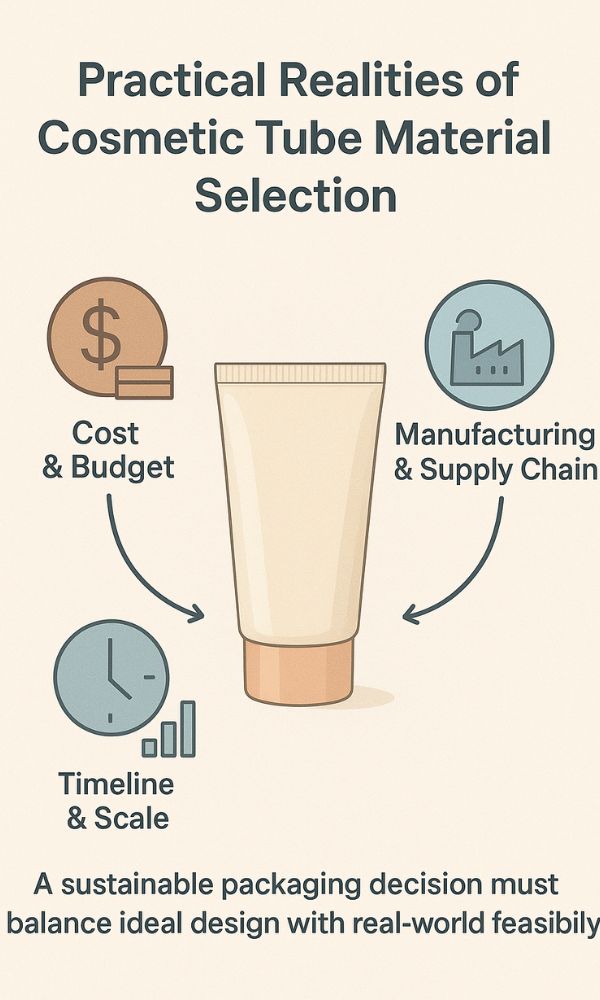
Die finale stel oorwegings by die keuse van 'n kosmetiese buismateriaal is intens prakties, wat die ekonomiese en logistieke realiteite behels om 'n produk na die mark te bring.
’n Ideale materiaalkeuse op papier is betekenisloos as dit nie binne jou begroting, tydlyn en skaal vervaardigbaar is nie.
'n Pragmatiese beoordeling van die voorsieningsketting, vervaardigingsproses en totale koste is noodsaaklik om 'n volhoubare en suksesvolle besigheidsbesluit te neem.
Loodtye en MOQ's: Die realiteite van die verkryging van verskillende materiale
Nie alle buismateriaal word gelyk geskep in terme van beskikbaarheid nie.
- Minimum bestelhoeveelhede (MOQ's): Dit verwys na die kleinste aantal eenhede wat 'n vervaardiger in 'n enkele lopie sal vervaardig. Standaardmateriaal soos wit of natuurlike PE het dikwels die laagste MOQ's, wat soms so laag as 5 000 of 10 000 eenhede begin, wat toeganklik is vir opkomende of onafhanklike handelsmerke. As jy egter 'n pasgemaakte kleur, 'n spesiale effek soos pêrelscentie of 'n hoë persentasie PCR-hars benodig, sal die vervaardiger dalk 'n baie hoër MOQ moet stel. Dit is omdat hulle hul masjinerie moet suiwer en 'n pasgemaakte materiaalmengsel vir jou hardloop moet uitvoer, wat net ekonomies op 'n groter skaal is (bv. 25 000 eenhede of meer). Gelamineerde buise (ABL/PBL) het ook dikwels hoër MOQ's as gevolg van die kompleksiteit van die verkryging en druk van die plat gelamineerde materiaal voordat dit in buise gevorm word.
- Lei tye: Dit is die tyd vandat jy jou bestelling plaas tot die voltooide buise ontvang word. Standaard PE-buise het tipies die kortste deurlooptye, dikwels ongeveer 4-6 weke. Die verkryging van gespesialiseerde harse, materiaal met 'n hoë PCR-inhoud of komplekse laminate kan weke of selfs maande by die tydlyn voeg. Wêreldwye voorsieningsketting-onderbrekings, soos algemeen in onlangse jare, kan die beskikbaarheid van spesifieke polimere of aluminiumfoelie verder beïnvloed.
Vir 'n nuwe handelsmerk wat sy eerste produk bekendstel, kan 'n materiaal met 'n lae MOQ en 'n betroubare, kort deurlooptyd die verstandigste keuse wees, wat groter behendigheid en minder aanvanklike kapitaaluitgawe moontlik maak.
Gevestigde handelsmerke met voorspelbare verkoopsvolumes kan beter geposisioneer wees om die skaalvoordele te benut wat gepaard gaan met die bestel van gespesialiseerde materiaal by hoër MOQ's.
Die totale koste van eienaarskap: verder as die prys per eenheid
Dit is 'n algemene fout om 'n buismateriaal te kies wat uitsluitlik gebaseer is op die laagste prys per eenheid wat deur 'n verskaffer gekwoteer word. Hierdie benadering ignoreer die “Totale koste van eienaarskap,” wat 'n veel wyer reeks potensiële uitgawes en risiko's insluit.
'n Goedkoper buis met 'n laer versperring kan jou vooraf vyf sent per eenheid bespaar.
As daardie keuse egter daartoe lei dat 2% van jou produk op die rak bederf weens oksidasie, sal die koste van die verlore goedere, klantterugsendings en skade aan jou handelsmerk se reputasie die aanvanklike besparing ver oorskry. Dink aan die materiaalkeuse as 'n vorm van versekering vir jou formule.
Oorweeg hierdie verborge koste:
- Produkverlies: Soos genoem, kan onversoenbaarheid tot bederf lei.
- Toetskoste: 'n Meer komplekse of nuwe materiaal kan meer uitgebreide en duur versoenbaarheids- en stabiliteitstoetse vereis.
- Gestuurkoste: Swaarder materiale soos aluminium of dikwandige buise sal versendingsgewigte en dus logistieke koste verhoog.
- Verlore geleentheidskoste: As 'n lang tyd vir 'n spesiale materiaal veroorsaak dat jy 'n belangrike kleinhandelseisoen (soos die vakansie) misloop, kan die verlore verkope aansienlik wees.
Die verstandigste benadering is om die koste van die buis te evalueer in verhouding tot die koste en sensitiwiteit van die formule daarin. Dit maak min sin om 'n $100-per-ons serum, geformuleer met duur en delikate aktiewe bestanddele, in die goedkoopste moontlike houer te verpak.
Die verpakkingskoste moet gesien word as 'n persentasie van die totale produkwaarde, en belegging in die behoorlike beskerming is 'n gesonde besigheidstrategie.
Werk saam met 'n OEM/ODM-vervaardiger vir materiaalkundigheid
Om deur die labirint van materiaalwetenskap, volhoubaarheidsregulasies en logistiek in die verskaffingsketting te navigeer, kan oorweldigend wees, veral vir handelsmerke sonder 'n toegewyde interne verpakkingsingenieurspan. Dit is hier waar die waarde van 'n sterk vennootskap met 'n ervare vervaardiger van oorspronklike toerusting (OEM) of oorspronklike ontwerpvervaardiger (ODM) duidelik word.
’n Kundige vervaardiger is meer as net ’n verkoper; hulle is 'n konsultant en 'n medewerker. Hulle het diepgaande, praktiese kennis van hoe verskillende materiale presteer, nie net in 'n laboratorium nie, maar in werklike produksie. Hulle kan onskatbare leiding gee:
- Materiaal aanbeveling: Op grond van jou formule se bestanddeellys, jou handelsmerk se estetika en jou begroting, kan hulle die geskikste materiaalopsies aanbeveel.
- Verkryging en keuring: Hulle het verhoudings met grondstofverskaffers gevestig en kan die kwaliteit en betroubaarheid van harse, laminate en PCR-bronne ondersoek.
- Tegniese uitvoerbaarheid: Hulle kan jou dadelik vertel of jou verlangde versiering haalbaar is op 'n spesifieke materiaal of as jou gekose pet versoenbaar is met 'n spesifieke buiskop.
- Reguleringsvoldoening: Hulle bly op hoogte van internasionale verpakkingsregulasies, soos dié rakende voedselkontakveiligheid of herwonne inhoudmandate, om te verseker dat jou verpakking aan jou teikenmarkte voldoen.
Deur gebruik te maak van die kundigheid van 'n vervaardigingsvennoot, verminder jy jou produkbekendstelling en maak jy jou eie span vry om te fokus op wat hulle die beste doen: formulering, bemarking en handelsmerkbou.
Hulle tree op as jou gids deur die komplekse maar kritieke proses van hoe om kosmetiese buismateriaal te kies, om te verseker dat die finale pakket pragtig, funksioneel, verantwoordelik en kommersieel lewensvatbaar is.
Gereelde Vrae (Gereelde Vrae)
Wat is die belangrikste verskil tussen 'n ABL- en 'n PBL-buis?
Die kernverskil lê in die sperlaag. 'n ABL (Aluminium Barrier Laminate) buis gebruik 'n dun laag aluminiumfoelie, wat 'n byna absolute versperring vir lig, suurstof en vog bied. 'n PBL (Plastic Barrier Laminate)-buis gebruik 'n plastiekversperring, tipies EVOH (Ethyl Vinyl Alcohol), wat uitstekende maar effens minder absolute beskerming bied. Esteties spring ABL-buise nie terug wanneer dit ingedruk word nie (a “doodvou”), terwyl PBL-buise 'n “terugspring” kwaliteit en terugkeer na hul vorm.
Is PCR-plastiek veilig vir kosmetiese produkte?
Ja, PCR (Post-Consumer Resin) word as veilig beskou vir kosmetiese verpakking wanneer dit verkry word van 'n betroubare verskaffer wat behoorlike skoonmaak- en verwerkingsprotokolle volg. Om enige risiko van direkte kontak met die formule uit te skakel, kies baie handelsmerke vir 'n multi-laag buis waar die binneste laag gemaak is van maagdelike, voedsel-graad plastiek, en die buitenste lae bevat die PCR-inhoud. Dit bied die volhoubaarheidsvoordeel sonder enige kompromie op produkveiligheid.
Hoe toets ek behoorlik of my formule versoenbaar is met 'n buismateriaal?
Die standaard bedryfspraktyk is om 'n stabiliteitstoets uit te voer. Jy vul monsters van jou gekose buis met jou finale produkformule en plaas dit in omgewingsbeheerde kamers by verhoogde temperature (bv. 40-45°C) en soms fietsry temperature vir 1 tot 3 maande. Dit versnel die verouderingsproses. Jy evalueer dan van tyd tot tyd beide die produk (vir veranderinge in kleur, reuk, pH, viskositeit) en die verpakking (vir lek, krake, swelling of delaminering).
Kan ek 'n ten volle herwinbare buis kry wat ook goeie versperringsbeskerming het?
Ja, dit is toenemend moontlik. 'n PBL-buis gemaak met 'n PE-struktuur en 'n EVOH-versperring is 'n sterk kandidaat. Terwyl die EVOH-laag 'n ander polimeer is, in klein persentasies (tipies minder as 5% van die totale pakketgewig), word dit deur baie herwinningsowerhede dikwels as verenigbaar met die PE-herwinningsstroom beskou. Raadpleeg altyd jou verpakkingsverskaffer oor die spesifieke herwinbaarheidsertifisering en riglyne vir hul materiaal in jou teikenmark.
Wat is “suikerriet plastiek” en is dit bioafbreekbaar?
Suikerrietplastiek, ook bekend as bio-poliëtileen, is 'n plastiek gemaak van die etanol afkomstig van suikerriet, 'n hernubare hulpbron. Chemies en struktureel is dit identies aan tradisionele poliëtileen wat van fossielbrandstowwe gemaak word. Dit is nie bioafbreekbaar nie. Die primêre omgewingsvoordeel daarvan is sy hernubare oorsprong en die feit dat die produksie daarvan koolstofnegatief kan wees. ’n Groot voordeel is dat dit ten volle herwinbaar is in die bestaande PE-herwinningstroom (nr. 2 of nr. 4).
Hoekom het sommige buise 'n sigbare naat?
'n Sigbare naat is 'n kenmerk van gelamineerde buise (beide ABL en PBL). Hierdie buise word gemaak deur op 'n plat vel gelamineerde materiaal te druk, wat dan gesny en in 'n silinder gerol word, en die rande word saam verseël om 'n buis te vorm. Hierdie aansluitingspunt skep die naat. Uitgedrukte buise, wat gemaak word deur gesmelte plastiek deur 'n sirkelvorm te dwing, is naatloos en maak voorsiening vir 360-grade versiering sonder onderbreking.
Hoe beïnvloed muurdikte my buis?
Muurdikte beïnvloed die buis se styfheid, gevoel en versperringseienskappe. ’n Dikker muur sal die buis meer aansienlik en minder buigsaam laat voel, wat dalk wenslik is vir ’n luukse produk of een wat regop moet staan. Dit bied ook 'n effens beter versperring as 'n dunner muur van dieselfde materiaal. ’n Dunner muur skep ’n sagter, makliker om te druk buis, wat ideaal is vir hoëviskositeit produkte, maar dalk minder premium voel.
Konklusie
Die reis om 'n kosmetiese buismateriaal te kies is 'n mikrokosmos van die handelsmerkbouproses self. Dit is 'n oefening om die presiese eise van die wetenskap te balanseer met die evokatiewe krag van kuns, die praktiese aspekte van handel met die dringende oproep om omgewingsrentmeesterskap. Dit is nie 'n besluit wat ligtelik geneem moet word of op 'n enkele maatstaf soos koste gebaseer moet word nie.
Soos ons ondersoek het, weerklink die keuse deur elke stadium van die produk se lewe, van die versekering van die stabiliteit van 'n komplekse formule tot die vorming van die verbruiker se eerste indruk en finale interaksie, en uiteindelik tot die lot van die pakkie se einde van die lewe.
’n Suksesvolle keuse is een wat ’n diepgaande begrip van die produk, ’n empatiese verbintenis met die verbruiker en ’n verantwoordelike bewustheid van die breër wêreld weerspieël.
Of dit nou deur die standvastige beskerming van 'n meerlaagse versperringsbuis, die tasbare volhoubaarheidsverklaring van 'n PCR-pakket, of die klassieke aantrekkingskrag van aluminium, die materiaal wat jy kies, word 'n integrale deel van jou produk se storie.
Deur bedagsaam by hierdie oorwegings betrokke te raak en met kundige kundiges saam te werk, kan jy verpakking skep wat nie net jou produk bevat nie, maar ook verhoog, die integriteit daarvan beskerm en jou handelsmerk se waardes kragtig uitdruk in die mededingende 2025-mark.
Verwysings
Cosme-packagings.com. (2025, 23 Mei). Hoe word kosmetiese buise gemaak? cosme-packagings.com. https://www.cosme-packagings.com/news/how-are-cosmetic-tubes-made-85095457.html
Keyopackaging.com. (2025, 27 Augustus). 'n Industriegids vir kosmetiese verpakkingsbuise. keyopackaging.com. https://www.keyopackaging.com/info/an-industry-guide-to-cosmetic-packaging-tubes-103109247.html
Lissonpackaging.com. (2025, 15 Mei). Hoe om die regte kosmetiese buis vir jou produk te kies: 'n Omvattende gids. lissonpackaging.com. https://www.lissonpackaging.com/how-to-choose-the-right-cosmetic-tube-for-your-product-a-comprehensive-guide
Pagpackaging.com. (2024, 17 April). Hoe om die regte buis vir jou skoonheidsprodukte te kies. pagpackaging.com. https://pagpackaging.com/how-to-choose-the-right-tube-for-your-beauty-products/
Stengpackaging.com. (2025, 5 Junie). Struktuur en proses van kosmetiese buis. stengpackaging.com. https://www.stengpackaging.com/jw/structure-and-process-of-cosmetic-tube/
Topfeelpack.com. (2024, 1 Januarie). Hoe om kosmetiese buismateriaal te kies: 'n Praktiese gids vir onafhanklike skoonheidshandelsmerke. topfeelpack.com. https://www.topfeelpack.com/news/how-to-choose-cosmetic-tube-material-a-practical-guide-for-independent-beauty-brands/
